




@admin
Hybridization/mixing will result in residual DNA from the ancestors. Yes you can find some commonality, but the people today are very different from their ancestors because of the new admixtures.
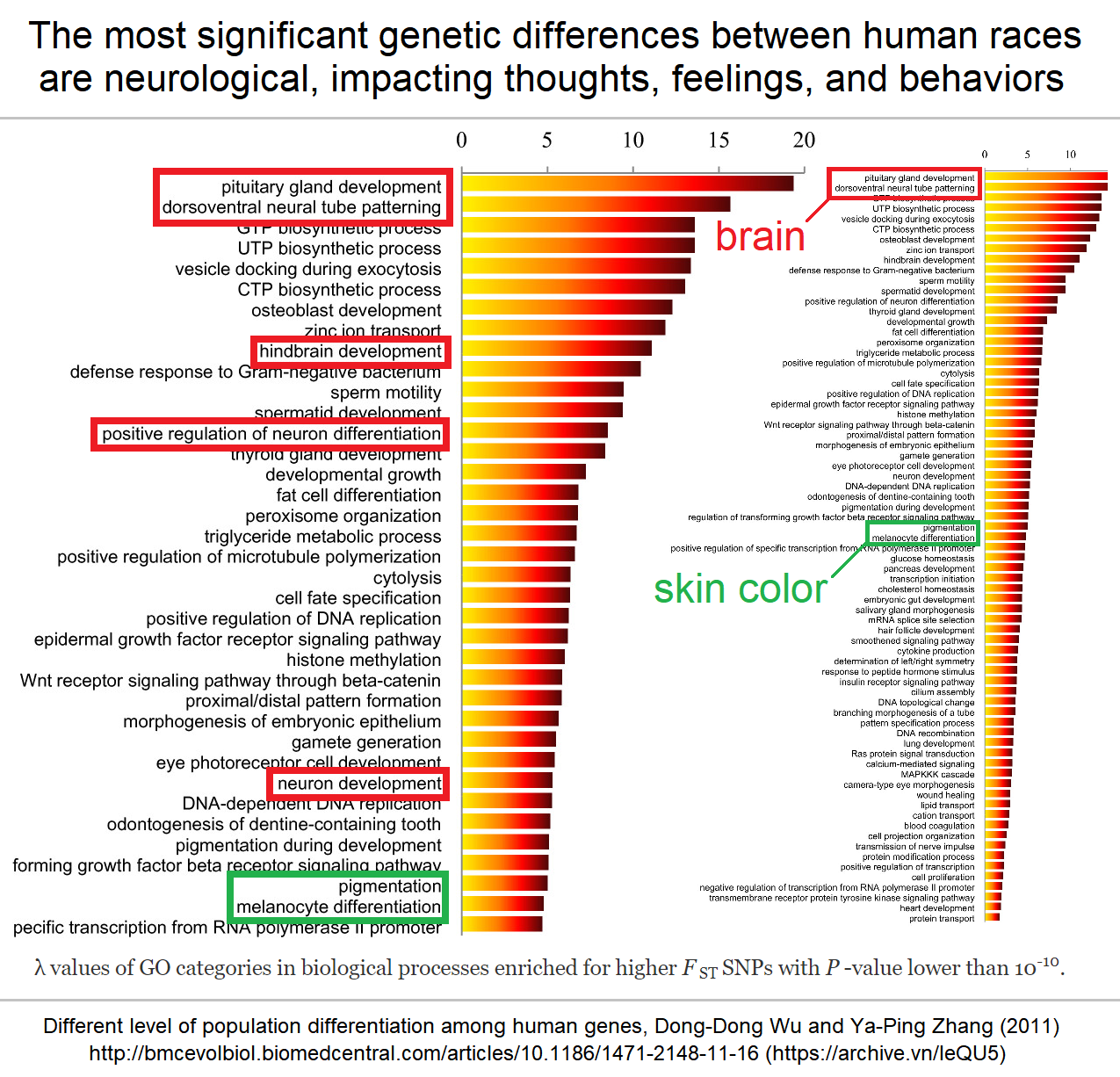
Beware of any claims that differences are 'small'. Small differences in FST (fixation index) between populations can result in big phenotypic differences between them.
You will find many more blondes in Milan and many more dark people in Napoli, but these are just the noticeable differences.

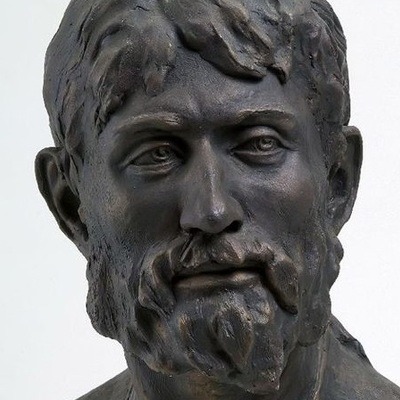
 ☦️ ⛽🧃
☦️ ⛽🧃
By the same token the foreigners that were brought into Italy during the Roman Empire, got completely assimilated into the local phenotype, and genetically there were never that many (only up to 15%). The ancient Italians LOOK very much like the modern Italians, same with the Greeks. Carleton S. Coon (physical anthropologist) actually writes this in his book "The Races Of Europe" about the Greeks. The City of Rome itself is another matter, but that's how it always is with large cities.
In conclusion, if there is a difference in appearance between North and South Italians it has always been there, and it is not due to any change in genetics, which was small, came from similar populations, and got assimilated over 1500 years.
@Dubbub
Other than through evolutionary processes of natural selection, environment does not change people's genetics and the phenotypic results. Franz Boas 🔯 and his acolytes pushed this fraudulent theory of environment determined anthropology far and wide. He said people's skulls changed because of the environment, which has been completely disproved. Read the forward of this book by Kevin McDonald. https://ravergram.club/nextcloud/s/afn8WdgAS7nd8DJ
Brits, from whom us Americans and Australians descend have a large diversity due to influxes of Romans, Egyptians, and various Germanics into the native celtic population. Some tan better than others. My friend from Australia is as pale as a ghost. When we go swimming, he must get out of the sun quickly or burn.
Studying all the racial movements and mixing in Italy and Greece is dizzying. Although you can find some people in those places whose physiognomy is like the ancients, they are a minority. After they largely mixed out, they lost their civilizations and greatness. When the people who created and maintained a civilization are gone, so goes the civilization.
it can put pressure on selection. which can enhance or diminished available traites. my brother and I look very different. same mom, same dad. you can see which family lines we each followed. he is strongly dads side im strongly moms. growing up many had trouble believing we were related at all. it's way more versatile than we think. the wife and her younger brother are often seen as twins ... our son is a carbon copy of wife's brother.
@VIcFUry
This is called polymorphism. Some races exhibit more polymorphism than others.
Two Europid parents could have children with blonde, red, and brown hair and blue, green, and hazel eyes. Two Negrid parents will only have children with black tight curly hair and dark eyes.
I already told you that this is false.
Charleton S. Coon - The Races of Europe:
>...it is my personal reaction to the living Greeks that their continuity with their ancestors of the ancient world is remarkable, rather than the opposite.
https://www.theapricity.com/snpa/chapter-XII14.htm
Skull shape =/= pigmentation.
Second pic are the Samaritans, this is what the pre-Arab Middle East looked like according to genetic studies. Mixing with them cannot change your skull shape because they have the same skull shape as Europeans.
@Dubbub
It is easy to disagree based on perceptions and outward appearances. City states of Greece differed in ethnicity. The Hellenic Greeks seemed to be a nordic dolichocephalic (long headed) people responsible for many of the great cultural advancements.
I am somewhat familiar with Coon and will explore this interesting site. This is the first time I have seen the word Nordish instead of Nordid or Nordic. 👍
@amerika @admin @Zeb
When southern Europeans were building Athens and Sparta and later Rome, northern Europeans were living in mud huts and picking lice out of each other’s beards.


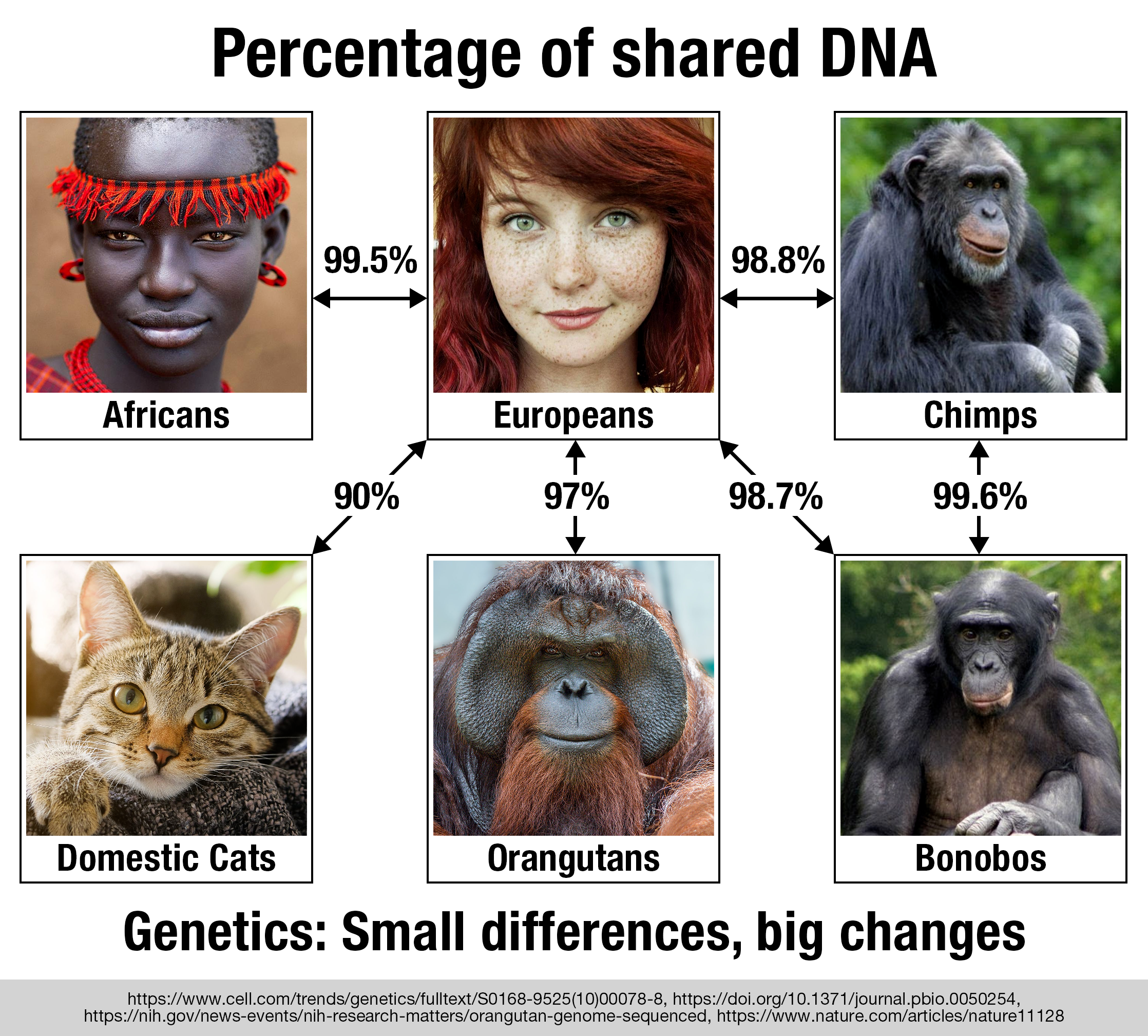


I see what you have trouble understanding, but the Greeks are still dolichocephalic (1st pic), and the first Hellenes had nothing in common with Northern Europe (2nd pic DNA heatmap). Because someone has a longer skull it doesn't make him "Nordic".


@Dubbub
Thanks. If we could look at genetic makeups at particular times in history, it would be more telling. Our understanding will always be incomplete, and debate on theories will persist.
Craniology was one of the best tools scientists had while raciology was an active science. The skull shapes found in burial sites was an indicator of race, but it does not tell the full story like you said. Archeogenetics (DNA sequencing old bones) is now revealing new information and upending previous theories on human migrations. The science seems today constrained by political forces in educational institutions since the world war (deemed racist). Here are some studies I am going through if interested:
Catalog of genetic studies on ancient Europeans. Newer studies may refute portions of these.
EARLY ANATOMICALLY MODERN HUMAN EXPANSIONS
Genetics and Material Culture Support Repeated Expansions into Paleolithic Eurasia from a Population Hub Out of Africa (2022) (https://doi.org/10.1093/gbe/evac045)
The role of genetic selection and climatic factors in the dispersal of anatomically modern humans out of Africa (2023) (https://www.pnas.org/doi/10.1073/pnas.2213061120)
The Persian plateau served as hub for Homo sapiens after the main out of Africa dispersal (2024) (https://www.nature.com/articles/s41467-024-46161-7)
PALEOLITHIC, MESOLITHIC
Population Genomics of Stone Age Eurasia (2022) (https://www.biorxiv.org/content/10.1101/2022.05.04.490594v2)
The genetic history of Ice Age Europe (2016) (https://pmc.ncbi.nlm.nih.gov/articles/PMC4943878/)
Palaeogenomics of Upper Palaeolithic to Neolithic European hunter-gatherers (2023) (https://www.nature.com/articles/s41586-023-05726-0)
Late Pleistocene human genome suggests a local origin for the first farmers of central Anatolia (2019) (https://www.nature.com/articles/s41467-019-09209-7)
The genomic origins of the world’s first farmers (2022) (https://www.cell.com/cell/fulltext/S0092-8674(22)00455-X)
Early Neolithic genomes from the eastern Fertile Crescent (2017) (https://pmc.ncbi.nlm.nih.gov/articles/PMC5113750/)
NEOLITHIC, BRONZE AGE
The Genetic Origin of the Indo-Europeans (2025) (https://pmc.ncbi.nlm.nih.gov/articles/PMC11922553/)
A genomic history of the North Pontic Region from the Neolithic to the Bronze Age (2025, supplement to above paper) (https://pmc.ncbi.nlm.nih.gov/articles/PMC11909631/)
Massive migration from the steppe was a source for Indo-European languages in Europe (2015) (https://reich.hms.harvard.edu/sites/reich.hms.harvard.edu/files/inline-files/nature14317.pdf)
Ancient genomics support deep divergence between Eastern and Western Mediterranean Indo-European languages (2024) (https://www.biorxiv.org/content/10.1101/2024.12.02.626332v1)
The formation of human populations in South and Central Asia (2019) (https://www.science.org/doi/10.1126/science.aat7487)
100 ancient genomes show repeated population turnovers in Neolithic Denmark (2024) (https://www.nature.com/articles/s41586-023-06862-3)
The genomic origins of the Bronze Age Tarim Basin mummies (2021) (https://www.nature.com/articles/s41586-021-04052-7)
Bronze and Iron Age population movements underlie Xinjiang population history (2022) (https://www.researchgate.net/publication/359661635_Bronze_and_Iron_Age_population_movements_underlie_Xinjiang_population_history)
IRON AGE, ANTIQUITY, MEDIEVAL
Stable population structure in Europe since the Iron Age, despite high mobility (2024) (https://pmc.ncbi.nlm.nih.gov/articles/PMC10827293/)
High-resolution genomic history of early medieval Europe (2025) (https://www.nature.com/articles/s41586-024-08275-2)
Steppe Ancestry in Western Eurasia and the Spread of the Germanic Languages (2025) (https://www.biorxiv.org/content/10.1101/2024.03.13.584607v2)
The Anglo-Saxon migration and the formation of the early English gene pool (2022) (https://www.nature.com/articles/s41586-022-05247-2)
Population genomics of the Viking world (2019) (https://www.biorxiv.org/content/10.1101/703405v1.full)
Evidence for dynastic succession among early Celtic elites in Central Europe (2024) (https://www.nature.com/articles/s41562-024-01888-7)
Demography and life histories across the Roman frontier in Germany 400–700 ce (2026) (https://www.nature.com/articles/s41586-026-10437-3)
The genomic history of the Iberian Peninsula over the past 8000 years (2019) (https://pmc.ncbi.nlm.nih.gov/articles/PMC6436108/)
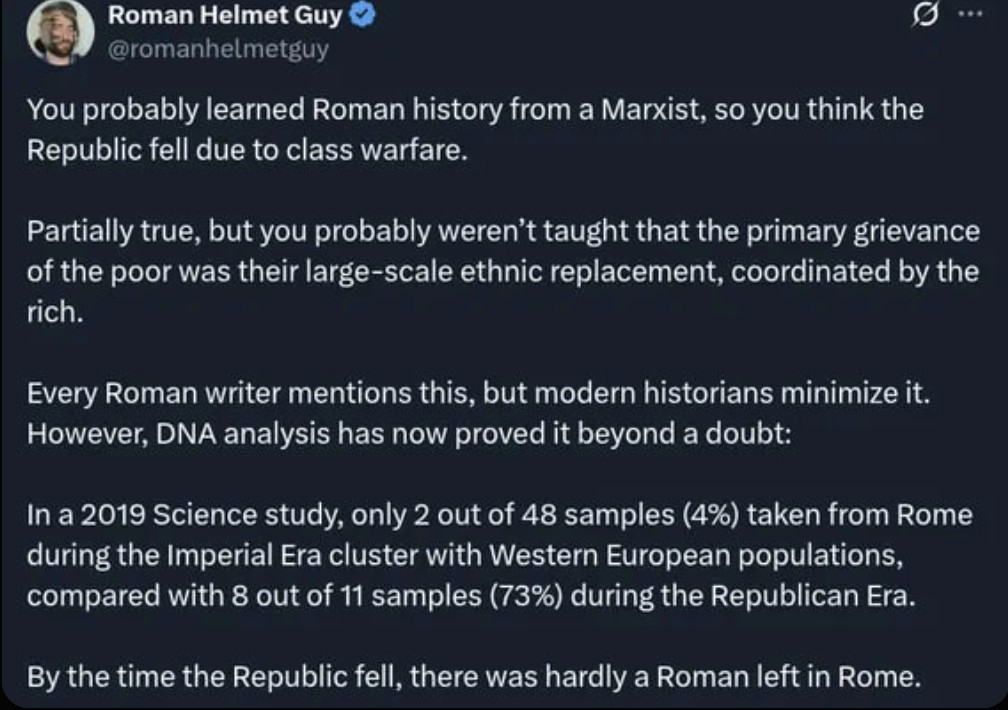
Ancient Rome: A genetic crossroads of Europe and the Mediterranean (2019) (https://www.science.org/doi/10.1126/science.aay6826)
The origin and legacy of the Etruscans through a 2000-year archeogenomic time transect (2021) (https://www.science.org/doi/10.1126/sciadv.abi7673)
Ancient DNA connects large-scale migration with the spread of Slavs (2025) (https://www.nature.com/articles/s41586-025-09437-6)
Genetic history of Rus’ (2025) (https://www.biorxiv.org/content/10.64898/2025.12.30.695215v1.full)
A genetic history of the Balkans from Roman frontier to Slavic migrations (2023, see supplements for detailed admixture analyses) (https://www.cell.com/cell/fulltext/S0092-8674(23)01135-2)
Ancient DNA reveals admixture history and endogamy in the prehistoric Aegean (2023) (https://www.nature.com/articles/s41559-022-01952-3)
Ancient DNA reveals the origins of the Albanians (2025) (https://www.biorxiv.org/content/10.1101/2023.06.05.543790v2.full)
Genetic history of Scythia (2025) (https://pmc.ncbi.nlm.nih.gov/articles/PMC12285711/)
Ancient DNA reveals the prehistory of the Uralic and Yeniseian peoples (2025) (https://pmc.ncbi.nlm.nih.gov/articles/PMC12342343/)
The genetic origin of Huns, Avars, and conquering Hungarians (2022) (https://www.cell.com/current-biology/fulltext/S0960-9822(22)00732-1)
Ancient DNA reveals reproductive barrier despite shared Avar-period culture (2025) (https://pmc.ncbi.nlm.nih.gov/articles/PMC11864967/)
Genome-wide data from medieval German Jews show that the Ashkenazi founder event pre-dated the 14th century (2022) (https://pmc.ncbi.nlm.nih.gov/articles/PMC9793425/)
@amerika @admin @Zeb
they import a lot of Labor.
No they haven't. I've lived in Tuscany for a couple of years and north italians love to joke about southern italians, calling them greeks quite often.
Thanks for the detailed explanation, it makes sense considering even the original romans were a small tribe from the mountains trhat went to conquer the others villages.
It's hard for americans to understand that there, even villages few miles away, may consider each other foreign (and speak different dialects).

@Zeb @amerika
After Rome embraced multiculturalism and made non Romans citizens, the Romans mixed out and empire crumbled. Today's Rome and most of southern Italy has no Romans.
The Ostrogoths, a Germanic people, conquered northern Italy and sacked Rome several times. Today northern Italy is still largely Germanic and the center of commerce and culture.
Italian is not a race. The kingdom and modern state of Italy was only created in 1861. Because it was a multiracial state, national socialism and nation primacy could not work there. Mussolini instead set state as primacy for fascism.