

TenaciousWolf @[email protected]
- Music
- Commentary
- Memes
New account, same wolf
🇺🇸 American
🧠 Analytical Mind
🎵 Melomaniac
🎮 Casual Gamer
🐈⬛ Friend of Cats
There’s only the journey
Let’s live and learn together, friends.
Stand for something or fall for everything.
Joined Apr 2026
TenaciousWolf
boosted

well it doesn't look Trump is gonna attack Iran on Shabbat so maybe tomorrow night or Sunday.
TenaciousWolf
boosted
TenaciousWolf
boosted


TenaciousWolf
boosted

@Terry
How the fuck does anyone still listen to Nick? Do they not notice how he always finds some gay excuse to pick a fight with any far-right candidate to cause a shitshow and divide any potential constituency? Nevermind all the January 6th shit. Dude is obviously a fed, just as obviously as he is a faggot.
How the fuck does anyone still listen to Nick? Do they not notice how he always finds some gay excuse to pick a fight with any far-right candidate to cause a shitshow and divide any potential constituency? Nevermind all the January 6th shit. Dude is obviously a fed, just as obviously as he is a faggot.
TenaciousWolf
boosted

TenaciousWolf
boosted

(a) As soon as the first permanent settlements had been established, the Jew was suddenly 'there.' He arrived as a merchant and, in the beginning, did not trouble to disguise his nationality. He still remained openly a Jew, partly it may be, because his appearance betrayed the racial difference between him and the people of the country in which he dwelt, or because he knew too little of the language. It may also be that people of other races refused to mix with him, so that he could not very well adopt any other pose than that of a foreign merchant. Because of his subtlety and cunning and the lack of experience on the part of the people whose guest he became, it was not to his disadvantage openly to retain his Jewish character. This may even have been advantageous to him, for the foreigner was received kindly.
(b) Slowly but steadily, he began to take part in the economic life around him, not as a producer, however, but only as a middleman. His commercial cunning, acquired through thousands of years of negotiation as an intermediary, made him superior in this field to the Aryans, who were still quite ingenuous and indeed clumsy, and whose honesty was unlimited, so that after a short time commerce seemed destined to become, a Jewish monopoly. The Jew began by lending out money and, as usual, at a usurious rate of interest. It was he who first introduced the payment of interest on borrowed money. The danger which this innovation involved was not at first recognised; indeed, the innovation was welcomed, because it offered momentary advantages.
(c) At this stage the Jew had become firmly settled; that is to say, he inhabited special sections of the cities and towns and had his own quarter in the market-towns. Thus he gradually came to form a State within the State. He came to look upon the commercial domain and all monetary transactions, as a privilege belonging exclusively to himself, and exploited it ruthlessly.
(d) At this stage finance and trade had become his complete monopoly. Finally, his usurious rate of interest aroused opposition, and the increasing impudence which the Jew began to manifest all round stirred up popular indignation, while his display of wealth gave rise to popular envy. The cup of his iniquity became full to the brim, when he included landed property among his commercial wares and degraded the land to the level of a market commodity. Since he himself never cultivated the soil, but considered it as an object to be exploited, allowing the peasant to remain on the land, but only on condition that he submitted to the most heartless exactions of his new master, public antipathy against the Jew steadily increased and finally turned into open animosity.
Adolf Hitler- Mein Kampf Stalag Edition Nature and Race Chapter XI Pg-264-265
TenaciousWolf
boosted

>The fact that Christianity is divided into so many thousands of competing factions and denominations
Or, humans have a tendency to divide themselves in to groups based off race and geographical location. Paganism was not united either and had tons of different sects.
Or, humans have a tendency to divide themselves in to groups based off race and geographical location. Paganism was not united either and had tons of different sects.
TenaciousWolf
boosted
TenaciousWolf
boosted
TenaciousWolf
boosted
TenaciousWolf
boosted
TenaciousWolf
boosted
A faggot kike.
His entire world view is about celebrating when White men and women are murdered.
His entire world view is about celebrating when White men and women are murdered.
TenaciousWolf
boosted

TenaciousWolf
boosted




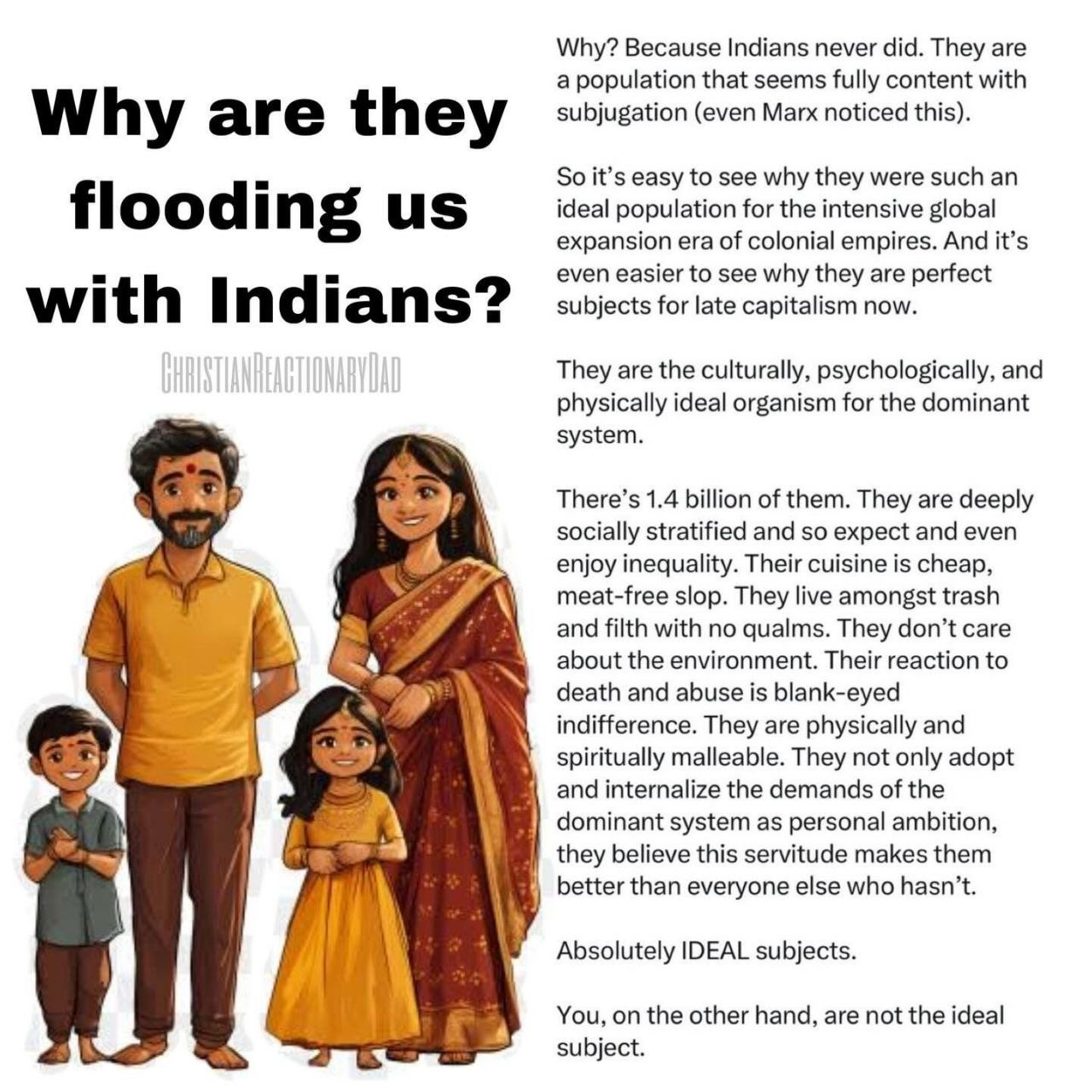
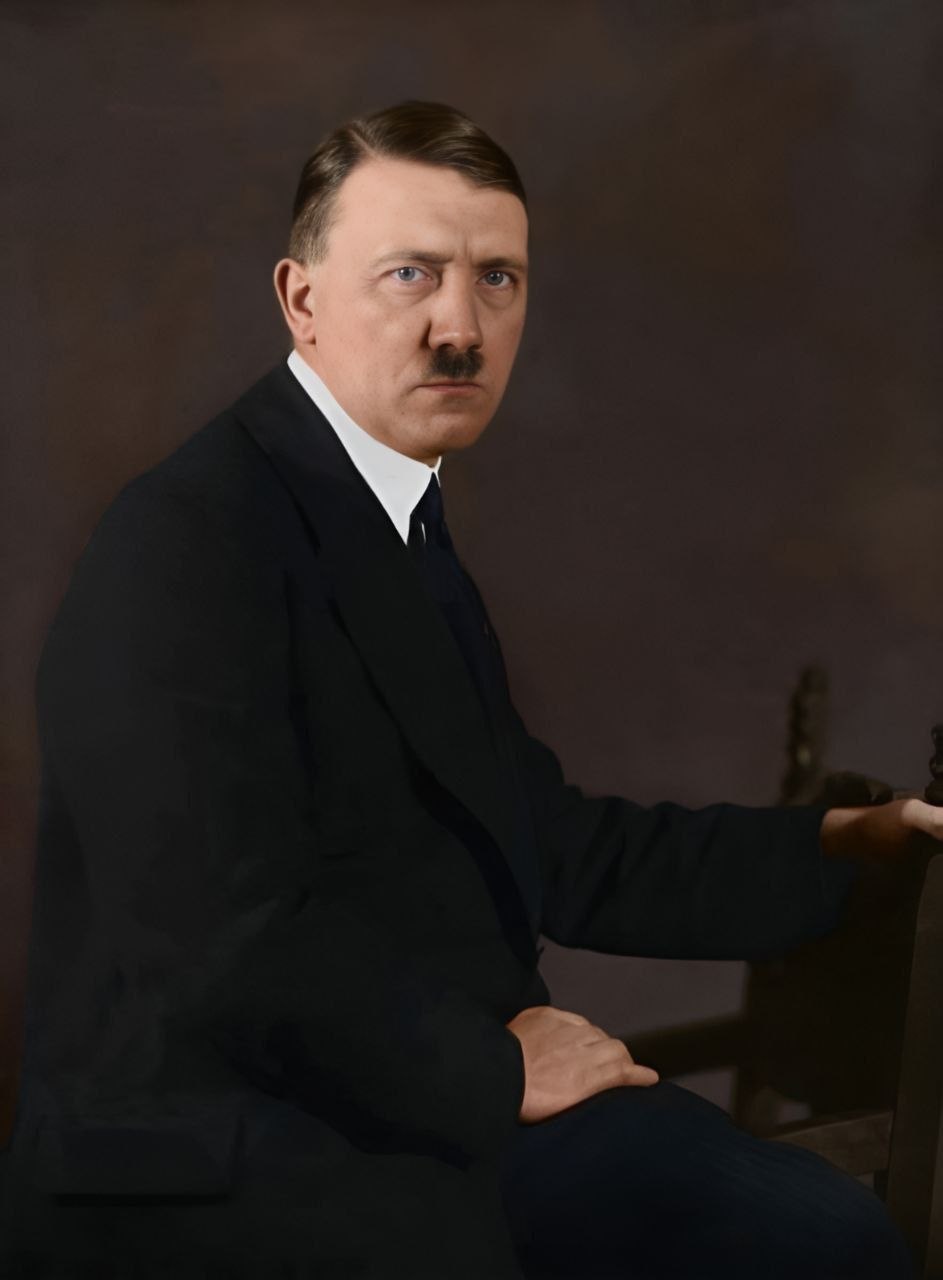
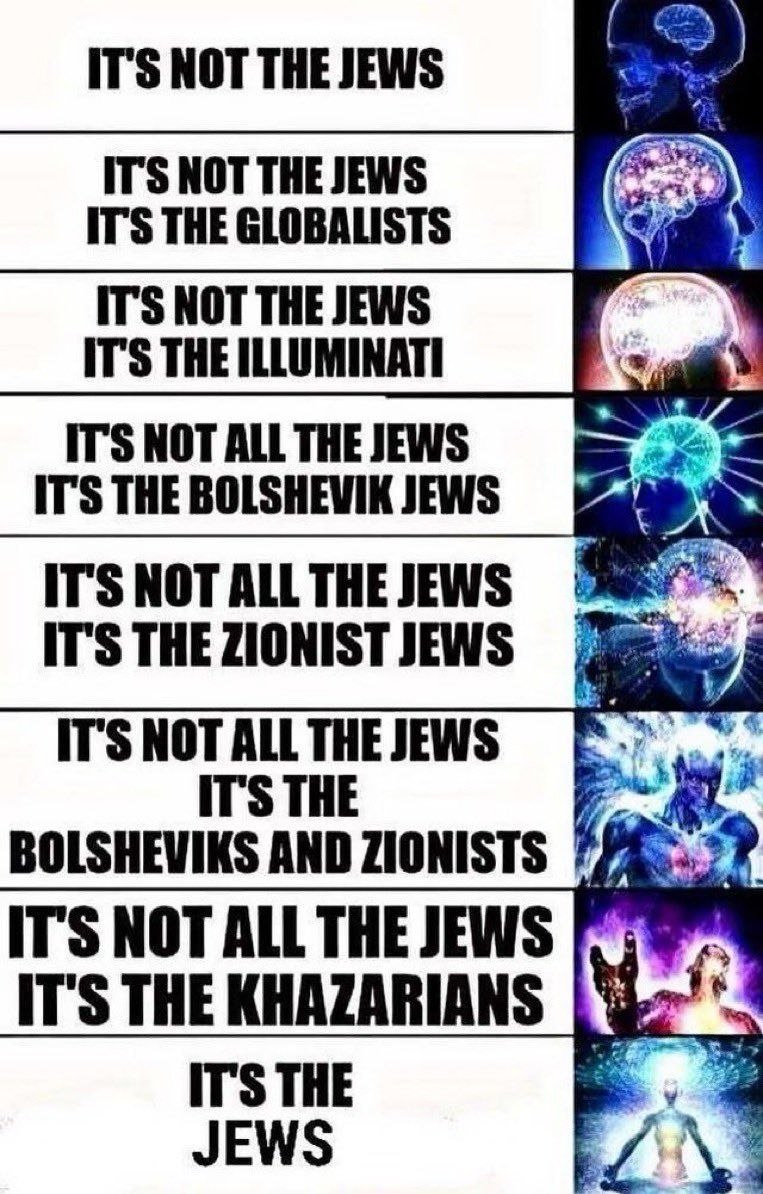

Weakness is now a virtue.
They think being weak makes the moral, because they can't hurt anyone.
They think being weak makes the moral, because they can't hurt anyone.
TenaciousWolf
boosted
Excited for the new season of the TFM Show so I made my own cyberpunk gals. Laurel the Bodyguard, Maya the Drone Girl, Desiree the Android Doll, Amanda the Tech Guru Assistant (making a duplicate / shadow clone jutsu), and of course, Irene the Hologram who can change sizes.

TenaciousWolf
boosted
guys I feel like this goes without saying, but please don't fedpost, especially on discord. They have AI to monitor your conversations, even your private ones and they'll pick up on it, this is assuming of course someone in your group chat doesn't rat on you themselves.

- Music
- Commentary
- Memes
New account, same wolf
🇺🇸 American
🧠 Analytical Mind
🎵 Melomaniac
🎮 Casual Gamer
🐈⬛ Friend of Cats
There’s only the journey
Let’s live and learn together, friends.
Stand for something or fall for everything.
Joined Apr 2026