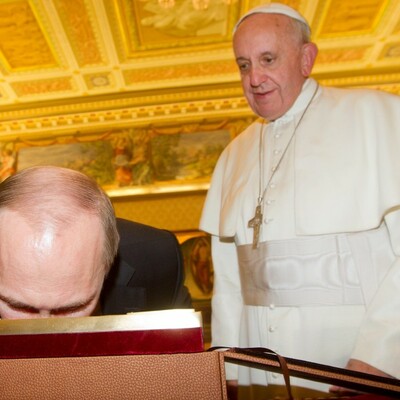
100% - 35% = 65%
At least 65% of the population can not handle the truth
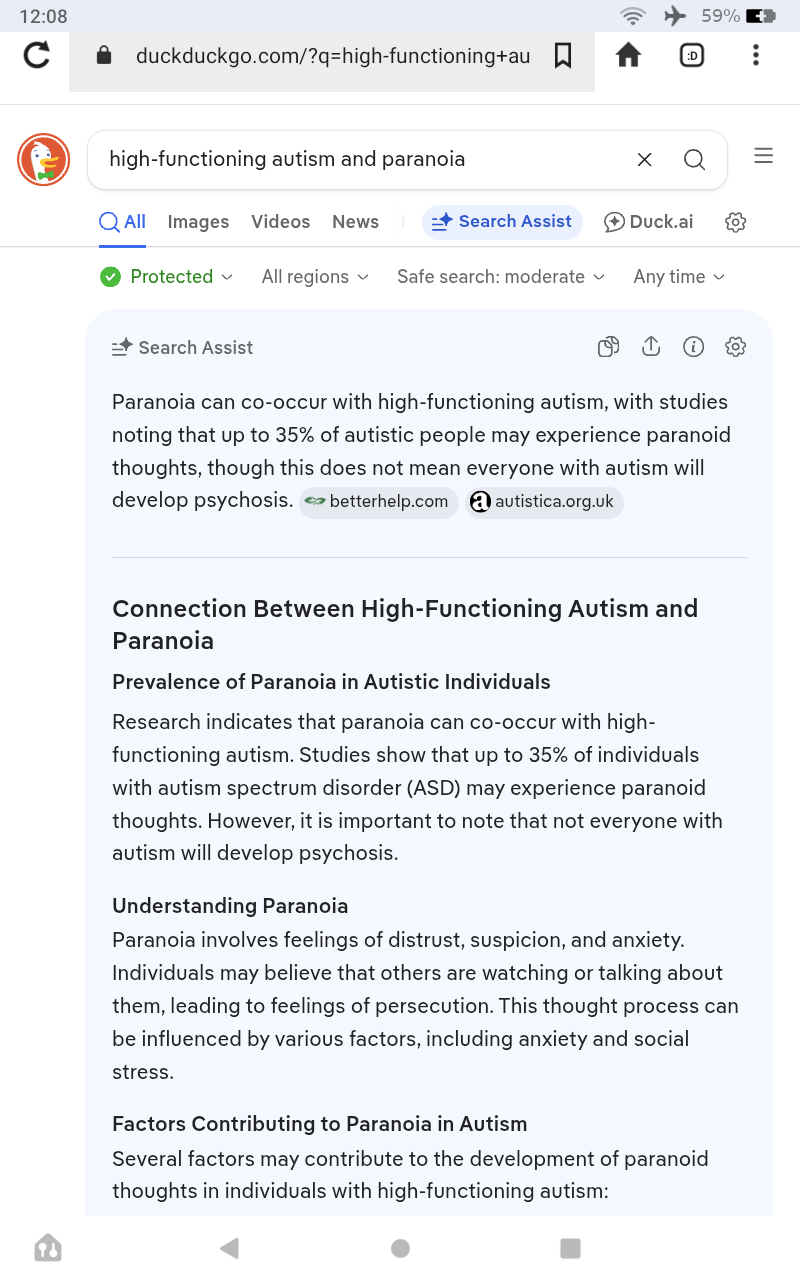
Screenshot of search results for high-functioning autism and paranoia provided
Search Assist
Paranoia can co-occur with high-functioning autism, with studies noting that up to 35% of autistic people may experience paranoid thoughts, though this does not mean everyone with autism will develop psychosis
I am presuming the percent of people diagnosed as autistic who are diagnosed as paranoid is greater than the percent of people who are not diagnosed as autistic that are diagnosed as paranoid
I am also presuming that speaking controversial truths will result in a diagnosis of paranoia
Someone can be diagnosed as paranoid without speaking controversial truths but someone can not speak controversial truths without being diagnosed as a paranoid conspiracy theorist

Right, so, not necessarily. :D
Although you're probably correct.
I should have said at least 65% are unwilling to speak the truth instead of at least 65% can not handle the truth
Being unwilling implies they are morally culpable
Children who speak the truth that other people refuse to acknowledge noticing maybe assigned
pervasive developmental disorder
where as adults who speak the truth that other people refuse to acknowledge noticing maybe assigned
autism
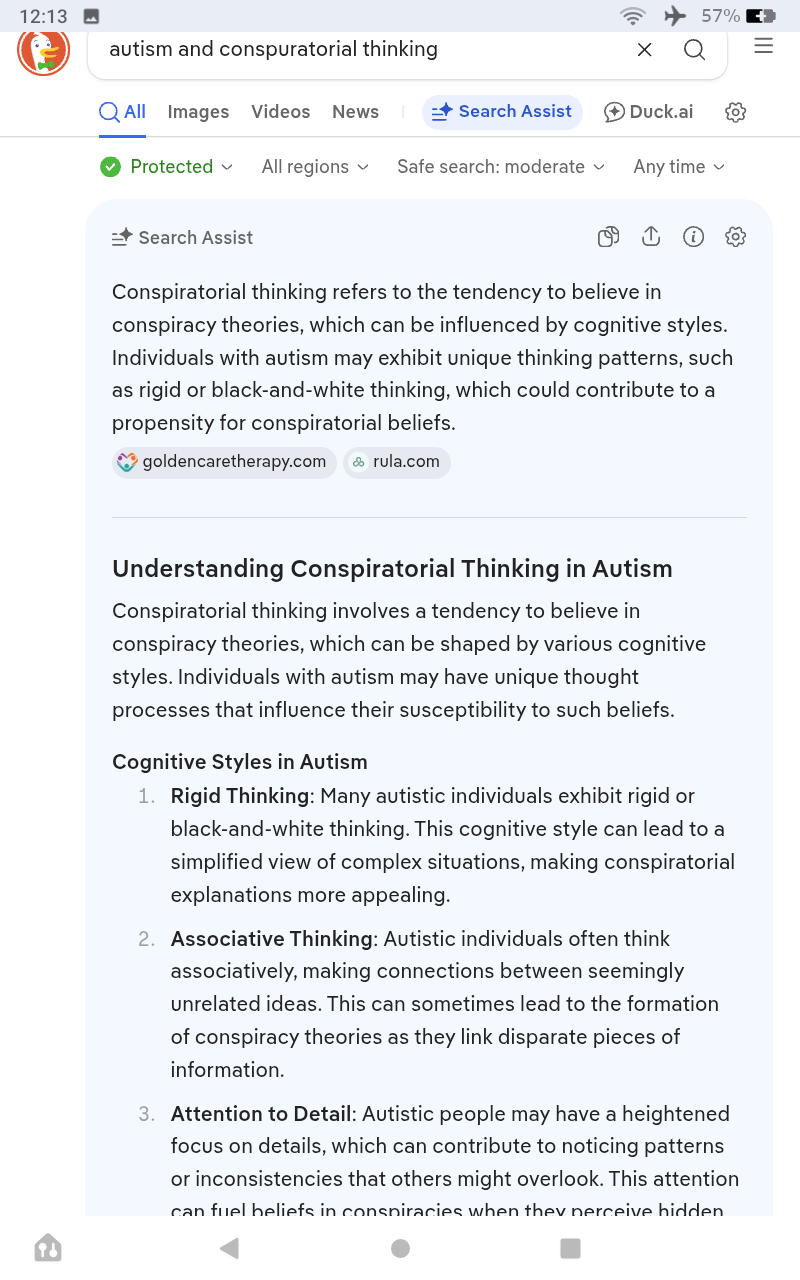
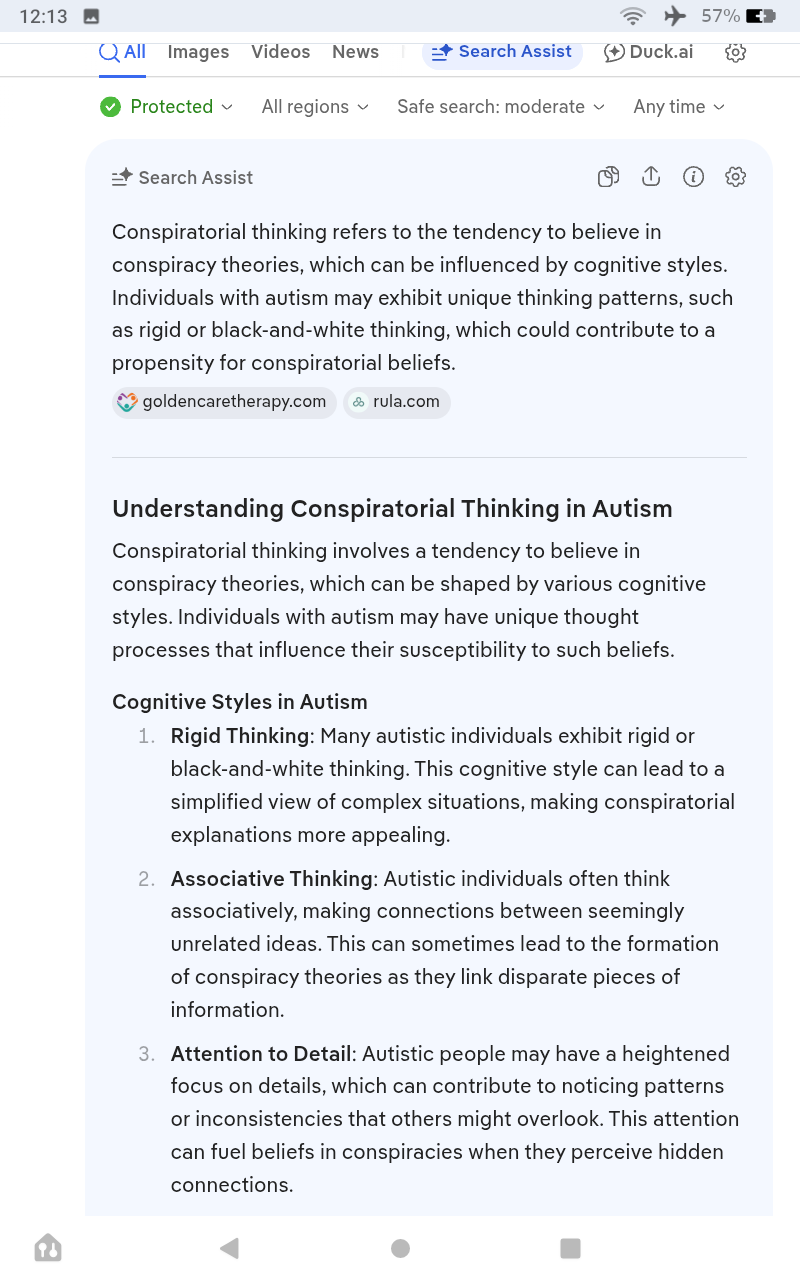
Attention to Detail: Autistic people may have a heightened focus on details, which can contribute to noticing patterns or inconsistencies that others might overlook. This attention can fuel beliefs in conspiracies when they perceive hidden connections.
Screenshots of search result which includes quote above

@shortstories Your maths is wrong. Read the text again. 35% of autistic people. 1-3.2% of the population is Autistic according to estimates. And 35% of this tiny group could be paranoid and autistic. So... 0.3-1% of the total population.
Less than 35% can handle the truth
More than 65% can not handle the truth
1% is less than 35%
1% is not greater than 65%
Not necessarily, unless you are asserting that you have to be both autistic and paranoid to handle the truth.