
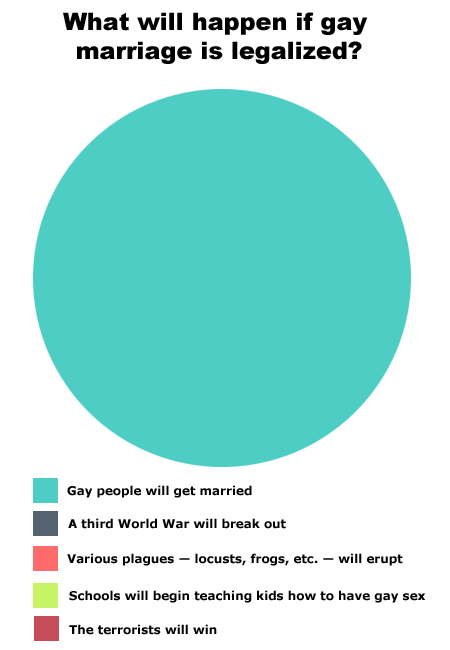
The slippery slope "fallacy" has been proven to be an effective tactic to shut down opposition to incremental enactment of unwanted policies and outcomes. In fact, I would argue that those proclaiming this as fallacious thinking are themselves are appealing to fallacious reasoning by simply declaring other outcomes as absurd. It also employs shaming tactics, where you use ridicule to suppress anyone who might see that the end outcomes are not so impossible as was implied by naysayers.

Although I am not suggesting that people break the age of consent or age of marriage laws
I would suggest that raising the age of consent and age of marriage laws except for special exceptions given by Kike Judges was part of a slippery slope to raise it to a higher and higher number so that it eventually becomes illegal for White Goyim to reproduce at any age meanwhile Kike Judges can grant exceptions for groups they want to allow to reproduce
India and China have older ages

"Search Assist
Stare decisis is a legal principle that requires courts to follow the precedents set by previous judicial decisions when ruling on similar cases. This doctrine promotes consistency and predictability in the law by ensuring that similar cases are decided in the same way."
some definition I copied and pasted
Does Stare Decisis also apply to laws congress passes or only decisions by judges
Nonetheless, a good legislature would be knowledged of court decisions, including the courts application of statutory interpretation generally, and specifically as to certain laws, and word and phrases, in their relative context. So in a way, it would have an effect at the legislative level as well.
As for each chambers internal rules, you're crossing into alice in wonderland territory, and most people aren't ready for discussing the internal functioning of congress.
Adventures in legal land by Marc Stevens with a C and not a K
The classic example is the 11th amendment, which was passed to overrule scotus' decision in Chisholm v. Georgia by changing the text of the constitution.

You have no authority here counselor

Your sexual fantasies have no authority here

> ew... gross... a pussy.
Your foot fetish needs a hose down
A simple legal error that otherwise has a basis will typically not be disturbed though. The court will leave correction to the political process.
An inferior court cannot apply the exceptions to a decision by a superior Court. That should be obvious. Otherwise chaos. The rule would break down.





@houseoftolstoy
So it is possible to set a boundary that one does not cross in either direction without having a slippery slope where the boundary keeps moving
But the reality in most cases of modern politics is that the politicians intend to change the boundary in the future so such a slippery slope is not a fallacy or it is a fallacy that happens to be true in that case but is called a fallacy because it is not true in all cases
The fallacy fallacy is to assume a fallacy can never be true