
Joined Jul 2022
doggel
boosted

Starbucks’ longtime CEO Howard Schultz is known to be an ardent supporter of the Israeli regime. Schultz has in the past boasted of being an active Zionist and worked closely with Israeli Premier Benjamin Netanyahu and radical Zionist settler groups, for which he even received awards.
Back in December 2013, around $11 billion in losses were reported, and it is estimated that the figure has now surged to $15 billion as the boycott campaign intensifies.
Last week, retail giant AlShaya Group, which owns the rights to operate Starbucks in West Asia, announced staff downsizing, citing “challenging trading conditions over the last six months.”
McDonald’s also has been hit by the boycott campaign. The US-headquartered company last month reported its first quarterly sales miss in nearly four years, sending the company’s shares down about 4 percent.
The company admitted that the losses were the reflection of “the impact of the war” in Gaza, where the Israeli regime has been carrying out relentless bombings since October 7.
“So long as this conflict, this war is going on, we’re not making any plans, we’re not expecting to see any significant improvement in this,” McDonald’s CEO Chris Kempczinski told investors.
“It’s a human tragedy what’s going on, and I think that that does weigh on brands like ours.”
Ian Borden, the company’s chief financial officer, also noted that the war had meaningfully impacted the fast food giant’s bottom line in the region during the last quarter of 2023.
The campaigns against McDonald’s, Starbucks and other multinational brands have significantly expanded in recent months, including in regional countries such as Jordan, Kuwait and Morocco.
Workers at American tech giants Google and Amazon have also stepped up pressure on their companies to snap ties with the Israeli regime, with Google workers also urging an end to Project Nimbus, under which the tech company supplies technology to the Israeli military for surveillance purposes.
The potential for the expansion of the boycott campaign remains high, as proved by recent large-scale protests in countries considered key trade partners of Israel, as well as public opinion in those countries.
Back in December 2013, around $11 billion in losses were reported, and it is estimated that the figure has now surged to $15 billion as the boycott campaign intensifies.
Last week, retail giant AlShaya Group, which owns the rights to operate Starbucks in West Asia, announced staff downsizing, citing “challenging trading conditions over the last six months.”
McDonald’s also has been hit by the boycott campaign. The US-headquartered company last month reported its first quarterly sales miss in nearly four years, sending the company’s shares down about 4 percent.
The company admitted that the losses were the reflection of “the impact of the war” in Gaza, where the Israeli regime has been carrying out relentless bombings since October 7.
“So long as this conflict, this war is going on, we’re not making any plans, we’re not expecting to see any significant improvement in this,” McDonald’s CEO Chris Kempczinski told investors.
“It’s a human tragedy what’s going on, and I think that that does weigh on brands like ours.”
Ian Borden, the company’s chief financial officer, also noted that the war had meaningfully impacted the fast food giant’s bottom line in the region during the last quarter of 2023.
The campaigns against McDonald’s, Starbucks and other multinational brands have significantly expanded in recent months, including in regional countries such as Jordan, Kuwait and Morocco.
Workers at American tech giants Google and Amazon have also stepped up pressure on their companies to snap ties with the Israeli regime, with Google workers also urging an end to Project Nimbus, under which the tech company supplies technology to the Israeli military for surveillance purposes.
The potential for the expansion of the boycott campaign remains high, as proved by recent large-scale protests in countries considered key trade partners of Israel, as well as public opinion in those countries.
doggel
boosted
By Press TV Website Staff
Last month, in what economic pundits saw as a death knell for the already-beleaguered Israeli economy, a US credit rating agency downgraded the regime’s rating and outlook.
The downgrade from “stable” to “negative”, according to Moody’s, is the direct consequence of the Israeli regime’s genocidal war on the Gaza Strip and political instability inside the occupied territories marked by growing discontent and simmering protests.
A few weeks ago, the Israeli regime’s Central Bureau of Statistics released another damning report, according to which Tel Aviv’s economy shrank by nearly one-fifth in the last quarter of 2023.
Amid depleting consumer spending, trade and investment since October 7, Israel’s Gross Domestic Product (GDP) recorded a 19.4 percent drop in its annual rate in the last three months of 2023.
Benjamin Netanyahu's regime launched a devastating war on the coastal Palestinian territory on October 7, stung by the unprecedented Al-Aqsa Storm Operation led by Hamas.
In the last 156 days, more than 31,000 Palestinians, including over 14,000 children and nearly 9,000 women have been killed in Gaza. It has also spawned the worst humanitarian crisis in the territory.
According to observers, the indiscriminate bombings on Gaza have badly backfired on the regime amid both internal and external turmoil for the Netanyahu regime.
Hundreds of thousands of Israeli reservists have in recent months been forced to abandon their jobs while many more have fled in panic, due to which major industries have come to a grinding halt.
The labor shortage is acute as over 350,000 reservists have been pressed into military service, as per the Organization for Economic Cooperation and Development, which says the law has caused a “pronounced slowdown” of the Israeli economy, which had grown about 3 percent before October 7.
Foreign investments have also virtually ended as investors are not willing to put their money on tinderbox – both due to the war in Gaza as well as the internal turmoil for the Netanyahu regime.
According to the data from the Israeli labor ministry in December, about 950,000 jobs were lost in the first three months of the war, which has increased manifolds now as the situation remains precarious and the war rages on - now into its sixth month.
Multi-national brands linked to the Israeli regime have also faced blanket boycotts in recent months, suffering enormous losses. Many companies have tried to distance themselves from the regime.
Last month, in what economic pundits saw as a death knell for the already-beleaguered Israeli economy, a US credit rating agency downgraded the regime’s rating and outlook.
The downgrade from “stable” to “negative”, according to Moody’s, is the direct consequence of the Israeli regime’s genocidal war on the Gaza Strip and political instability inside the occupied territories marked by growing discontent and simmering protests.
A few weeks ago, the Israeli regime’s Central Bureau of Statistics released another damning report, according to which Tel Aviv’s economy shrank by nearly one-fifth in the last quarter of 2023.
Amid depleting consumer spending, trade and investment since October 7, Israel’s Gross Domestic Product (GDP) recorded a 19.4 percent drop in its annual rate in the last three months of 2023.
Benjamin Netanyahu's regime launched a devastating war on the coastal Palestinian territory on October 7, stung by the unprecedented Al-Aqsa Storm Operation led by Hamas.
In the last 156 days, more than 31,000 Palestinians, including over 14,000 children and nearly 9,000 women have been killed in Gaza. It has also spawned the worst humanitarian crisis in the territory.
According to observers, the indiscriminate bombings on Gaza have badly backfired on the regime amid both internal and external turmoil for the Netanyahu regime.
Hundreds of thousands of Israeli reservists have in recent months been forced to abandon their jobs while many more have fled in panic, due to which major industries have come to a grinding halt.
The labor shortage is acute as over 350,000 reservists have been pressed into military service, as per the Organization for Economic Cooperation and Development, which says the law has caused a “pronounced slowdown” of the Israeli economy, which had grown about 3 percent before October 7.
Foreign investments have also virtually ended as investors are not willing to put their money on tinderbox – both due to the war in Gaza as well as the internal turmoil for the Netanyahu regime.
According to the data from the Israeli labor ministry in December, about 950,000 jobs were lost in the first three months of the war, which has increased manifolds now as the situation remains precarious and the war rages on - now into its sixth month.
Multi-national brands linked to the Israeli regime have also faced blanket boycotts in recent months, suffering enormous losses. Many companies have tried to distance themselves from the regime.
doggel
boosted
Domestic economy in tatters
Every sector of the Israeli economy – from high-tech to agriculture to tourism to various industries – has been irreparably dented by the raging war on Gaza, a problem exacerbated by the shortage of workforce and precarious situation.
Many businesses have suspended their operations while others have been forced to shut down their operations. Some workers have been forced to join military duty while many others have fled.
A Bloomberg survey last month said the Israeli economy suffered one of its worst-ever slumps after it launched the genocidal war on Palestinians in Gaza, with businesses coming to a screeching halt.
The regime’s GDP plummeted by 19.4 percent in the last quarter of 2023, which the report said was worse than every estimate in its survey of analysts.
“The release highlights the degree to which the Israeli economy has been affected by the conflict, particularly on the private activity side,” Goldman Sachs economists Tadas Gedminas and Kevin Daly were quoted as saying in the report.
Israeli newspaper Maariv, in a report earlier this week, also said the continuation of the Israeli war on Gaza has contributed to massive losses for the regime in both political and economic spheres.
It followed another report published by the Israeli website Walla, which cited the Director of the Israeli Tax Authority Shai Aharonovitz as saying that the damage caused by the Gaza war is “six times greater” than the Second Lebanon War (2006), and about half a million compensation claims have been filed by those who have suffered due to it.
According to analysts, the Israeli war on Gaza, which has failed in all its stated objectives, has resulted in a steep drop in the regime’s tax revenues, skyrocketing debt and economic recession.
The regime's GDP has also taken a serious blow, as attested by Moody’s report in February, which cut the regime’s rating to ‘A2’ and described its credit outlook as ‘negative’.
It was the first time ever that the regime’s economic outlook was downgraded, pointing to the staggering costs of the war that is increasingly turning out to be an exercise in futility.
The war, according to analysts, has discouraged potential investors and disrupted the labor market, especially with hundreds of thousands of workers summoned for mandatory military duty.
In a report in November, the Bank of Israel said the absence of thousands of workers from their jobs was costing the Israeli economy an estimated $600 million a week, or about 6 percent of the weekly GDP.
That number, according to economic analysts, has surged dramatically in the past three months, to the tune of a few billion dollars every week.
The regime’s tourism industry has also been affected. Monthly figures announced by Israel’s Central Bureau of Statistics revealed that in January only 500 single-day visits to the occupied territories were registered, compared to 14,000 in January 2023, marking a drastic decrease of 96 percent.
The travel industry used to make up nearly 3 percent of the regime’s GDP in 2019, before the pandemic. The figure fell to 1.1 percent in 2021 and has been virtually paralyzed since October 7.
The Israeli newspaper Calcalist reported in January that about 900,000 tourists were expected to visit the occupied territories in the three months after the start of the war. The number dropped to 190,000 because many of them opted out. That number has also sharply come down now.
Every sector of the Israeli economy – from high-tech to agriculture to tourism to various industries – has been irreparably dented by the raging war on Gaza, a problem exacerbated by the shortage of workforce and precarious situation.
Many businesses have suspended their operations while others have been forced to shut down their operations. Some workers have been forced to join military duty while many others have fled.
A Bloomberg survey last month said the Israeli economy suffered one of its worst-ever slumps after it launched the genocidal war on Palestinians in Gaza, with businesses coming to a screeching halt.
The regime’s GDP plummeted by 19.4 percent in the last quarter of 2023, which the report said was worse than every estimate in its survey of analysts.
“The release highlights the degree to which the Israeli economy has been affected by the conflict, particularly on the private activity side,” Goldman Sachs economists Tadas Gedminas and Kevin Daly were quoted as saying in the report.
Israeli newspaper Maariv, in a report earlier this week, also said the continuation of the Israeli war on Gaza has contributed to massive losses for the regime in both political and economic spheres.
It followed another report published by the Israeli website Walla, which cited the Director of the Israeli Tax Authority Shai Aharonovitz as saying that the damage caused by the Gaza war is “six times greater” than the Second Lebanon War (2006), and about half a million compensation claims have been filed by those who have suffered due to it.
According to analysts, the Israeli war on Gaza, which has failed in all its stated objectives, has resulted in a steep drop in the regime’s tax revenues, skyrocketing debt and economic recession.
The regime's GDP has also taken a serious blow, as attested by Moody’s report in February, which cut the regime’s rating to ‘A2’ and described its credit outlook as ‘negative’.
It was the first time ever that the regime’s economic outlook was downgraded, pointing to the staggering costs of the war that is increasingly turning out to be an exercise in futility.
The war, according to analysts, has discouraged potential investors and disrupted the labor market, especially with hundreds of thousands of workers summoned for mandatory military duty.
In a report in November, the Bank of Israel said the absence of thousands of workers from their jobs was costing the Israeli economy an estimated $600 million a week, or about 6 percent of the weekly GDP.
That number, according to economic analysts, has surged dramatically in the past three months, to the tune of a few billion dollars every week.
The regime’s tourism industry has also been affected. Monthly figures announced by Israel’s Central Bureau of Statistics revealed that in January only 500 single-day visits to the occupied territories were registered, compared to 14,000 in January 2023, marking a drastic decrease of 96 percent.
The travel industry used to make up nearly 3 percent of the regime’s GDP in 2019, before the pandemic. The figure fell to 1.1 percent in 2021 and has been virtually paralyzed since October 7.
The Israeli newspaper Calcalist reported in January that about 900,000 tourists were expected to visit the occupied territories in the three months after the start of the war. The number dropped to 190,000 because many of them opted out. That number has also sharply come down now.
doggel
boosted
doggel
boosted
This is what must be done, nationwide unity against evil that must be crushed.
doggel
boosted
doggel
boosted

When in 1550 the Polish King Sigismund August desired to permit Jews free entry into Russia, this was denied by Ivan with these words:
“We absolutely do not permit the entry of the Jew into my lands, because we do not wish to see evil in our lands, but rather may God grant that the people in my land may have rest from that irritation. And you, our brother, should not write us on account of the Jews again,” for they had “alienated the Russians from Christianity, brought poisonous plants into our lands and done much evil to our lands."
From Alexander Solzhenitsyn's "Two Hundred Years Together"
“We absolutely do not permit the entry of the Jew into my lands, because we do not wish to see evil in our lands, but rather may God grant that the people in my land may have rest from that irritation. And you, our brother, should not write us on account of the Jews again,” for they had “alienated the Russians from Christianity, brought poisonous plants into our lands and done much evil to our lands."
From Alexander Solzhenitsyn's "Two Hundred Years Together"
doggel
boosted
doggel
boosted

doggel
boosted
doggel
boosted
doggel
boosted
Mfw ended a long friendship with a fellow WN. He said that the attack was justified because of the war(fucking nimrod). Since he's of French origin i asked if it was justified for the stadium massacre to happen in Paris a few years ago because the French cant stop petting niggers in Africa and worship Israel. He snapped and we had a brawl, decided to end it for good. Go and fuck yourself you French faggot.
doggel
boosted

The ‘American Dream’ of 2 Kids, a House and a Car Now Costs $3.4 Million https://finance.yahoo.com/news/american-dream-2-kids-house-161651193.html
doggel
boosted
doggel
boosted

@Tfmonkey This is a terrorist attack organized by the US and Israel on Russian soil. Any retaliation less than attacking direct US and Israeli targets, not their sand nigger pets, is cuckoldry
doggel
boosted

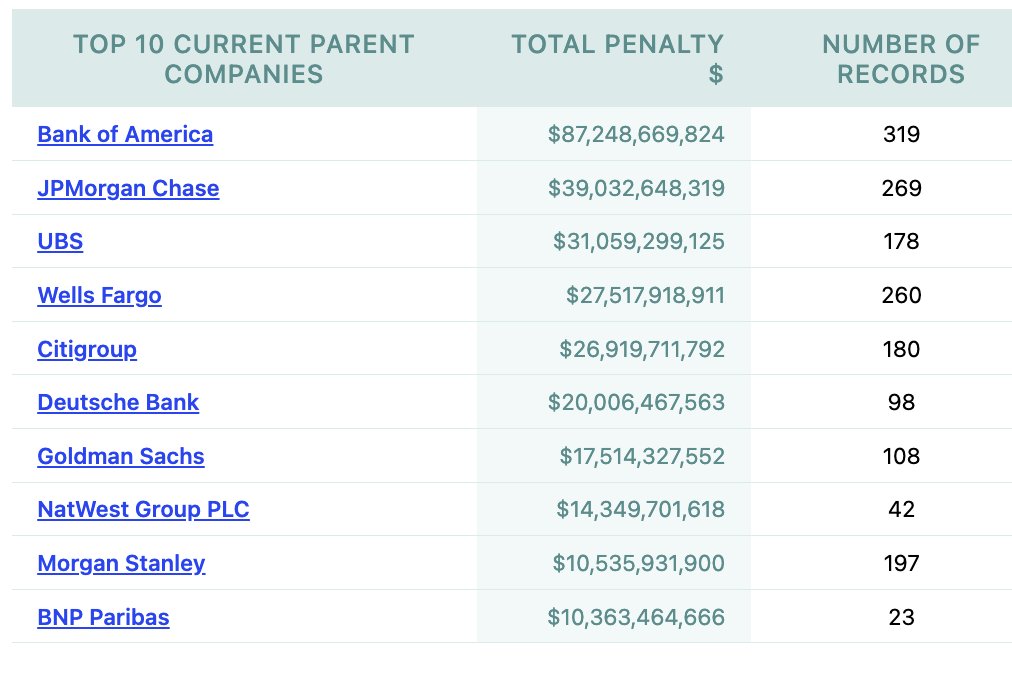
Since 2000, regulators fined banks 7,400+ times totaling to fines of $380+ Billion, about 1/3rd of the total crypto market capitalization today.
Either banking is criminal by definition or the rules are broken. The crypto space looks like a nunnery by contrast.
Either banking is criminal by definition or the rules are broken. The crypto space looks like a nunnery by contrast.
doggel
boosted










Joined Jul 2022