
shortstories @[email protected]
Nationalism not Globalism
Local Anarchist communities not Worldwide Anarchism
Corporations, United Nations Governments, Most Media and Most Clergy are on Team Evil
The Jewish religion intends to exterminate Christians
The Jewish religion intends to enslave or exterminate Gentiles or Goyim
Palestinians are the true Hebrew Israelites
at short stories at
poa dot st
@shortstories
merovingian dot club
@shortstories
worldchristianfaith.blogspot.com
Joined Sep 2023
"I tried to learn Greek, Hebrew and Arabic because they were too difficult because of their gender, number monstrosities"
Typo
"I tried to learn Greek, Hebrew and Arabic but they were too difficult because of their gender, number monstrosities"
I wanted to learn all the ancient languages of the modern major world religions but they were just so difficult I decided I am going to give up if I can not master easier languages
Ancient Greek verbs are nasty
For one verb You might memorize five words and then a different conjugation pattern for each of the five words
So a verb has multiple different forms spelled differently and then each form is conjugated into a different table
Right now I am trying to complete Korean and Indonesian as my goal
And I signed up for other genderless languages also
If I complete all the genderless languages then I will try to learn Greek, Hebrew, Arabic, Hindi, French and Spanish
I tried to learn Greek, Hebrew and Arabic because they were too difficult because of their gender, number monstrosities
I am only studying genderless languages on duolingo
If I complete all the genderless languages they have then maybe I will try learning a language with gender
The people who invented Hebrew are sick in the head
Not only do the nouns have genders but the verbs have genders
I strongly suspect that Hebrew language has influenced transgenderism with their obsession with assigning gender to things that have no biological gender to a degree greater than most other languages
@BHG
If a politician ( who is not defending themself ) tries to shoot you with a gun and they miss and load to shoot another shot
And you shoot them in self defense
Then you used defense force and did not initiate violence
The politician initiated violence through their act of aggression
"True I often figh with the and a/an. Because in slavic it does not exist too so I often forget it and for me it is waste of time.
I like when i learn russian they have it simple too.
Like On politik it would be translated He is a politician. So when I just do he is politician it take my heart away :("
Yes that is exactly the problem that frustrates me with their Korean language learning tool
shortstories
boosted

@shortstories True I often figh with the and a/an. Because in slavic it does not exist too so I often forget it and for me it is waste of time.
I like when i learn russian they have it simple too.
Like On politik it would be translated He is a politician. So when I just do he is politician it take my heart away :(
I just find it annoying that it makes you choose very specific translation choices where the language is ambiguous and marks the points as wrong If you do not choose just the right choice
Over all I think it is one of the fastest ways to learn and still suggest using it and then figuring out the fine details it gets wrong later
I just which it would stop marking things wrong if I do not insert the word "a", "an" or "the" when words with these meanings do not even exist in Korean
The problem is they will mark sentences wrong If you do not use the correct choice of "a", "an", "the", "this", "that", "those" or "these" but Duolingo does not understand that translation correctly and it is really annoying
You sometimes can not tell if a word is singular or plural without a number but duolingo makes you choose a singular or plural version of the word
So it makes you select a lot of very specific English translation choices where the translation is ambiguous
The problems with the grammar are going to be the same no matter which dialect
The pronouns do not have gender in Korean
There are no words that translate as "a", "an", or "the" in Korean
Words that Duolingo translates as "this", "that", "a", "the", "those", "these" are misunderstood because they have special meanings that have to do with the location of objects that can not easily be translated to a single English word
So for Korean there are different dialects in South Korea but there is a official standard dialect
Some of the compound vowels used to be pronounced different but in the standard dialect there are multiple compound vowels that make the same sound
The problem with Duolingo is not the dialects but the grammar
shortstories
boosted

The law isn't abridged. It is ignored. We have a lawless society of professional victim groups. The problem is the people. We attract victims. From ability & to need.
Why don't you just say let's not buy hotels and gas stations for indians?
Why don't you just say let's not buy hotels and gas stations for indians?
He seems to think the definition is different from what I said but it is still different than the way duolingo uses words based on spelling variants of these types of words
Some of my previous comments about Y, G and J location words might have been wrong but Duolingo is also wrong
I maintain that I am correct to the best of my knowledge about the other points however
https://www.youtube.com/watch?v=Zzg8p8eaWRc
Here, (Over)There in Korean Explained Clearly!
Korean Ryan
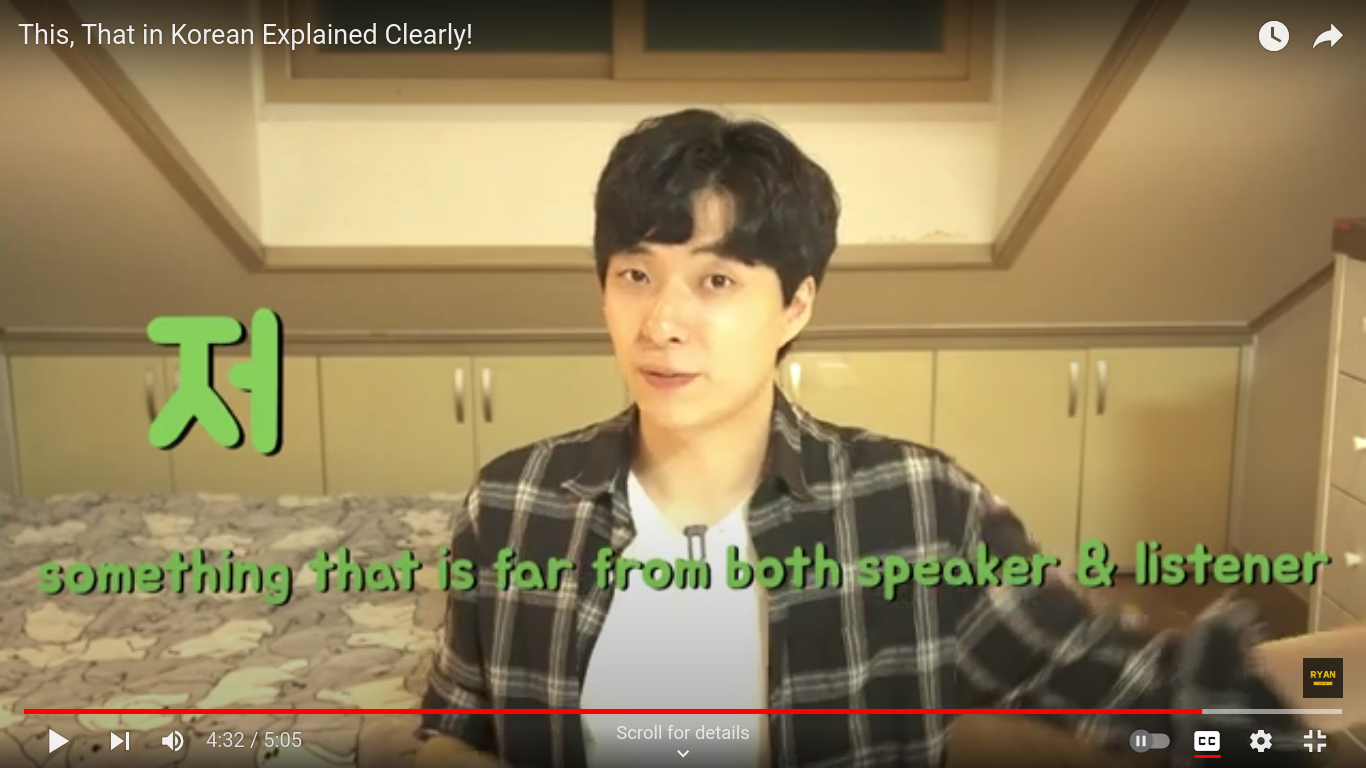
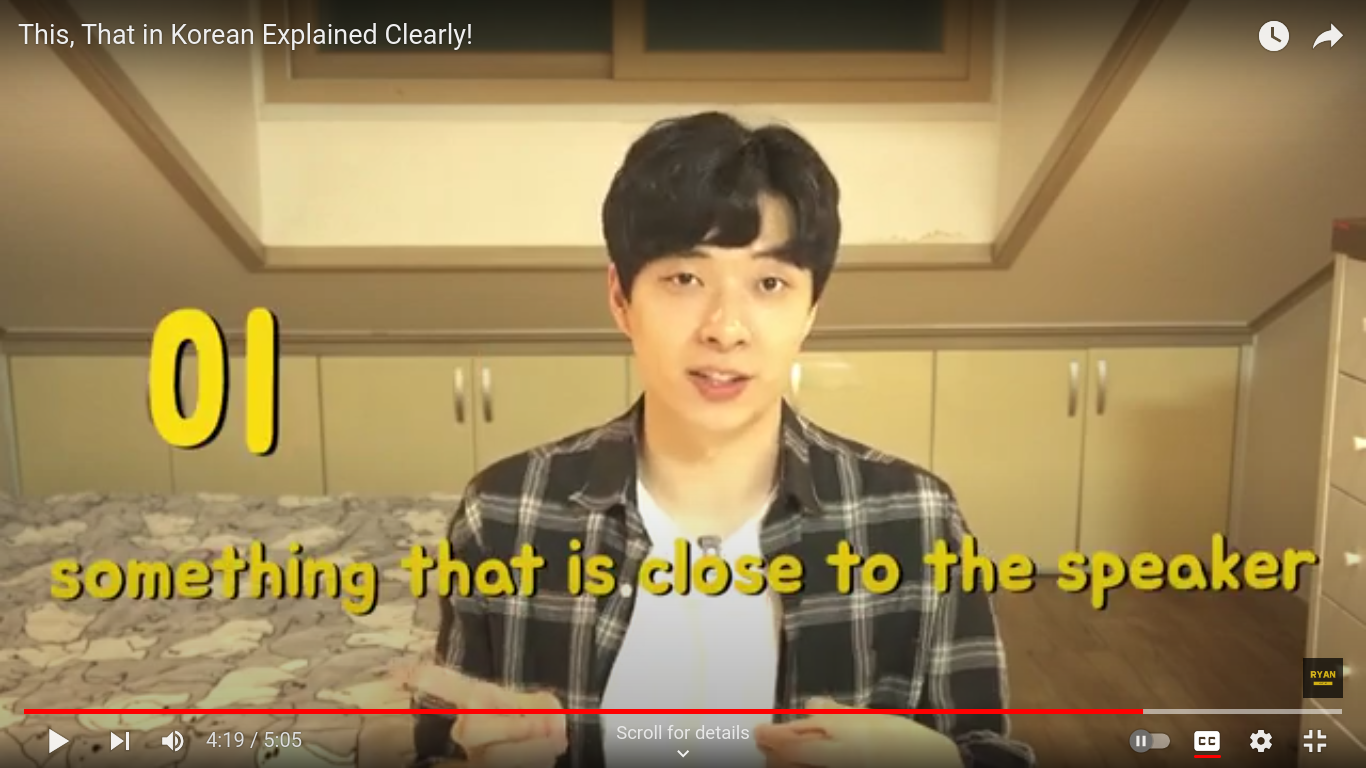
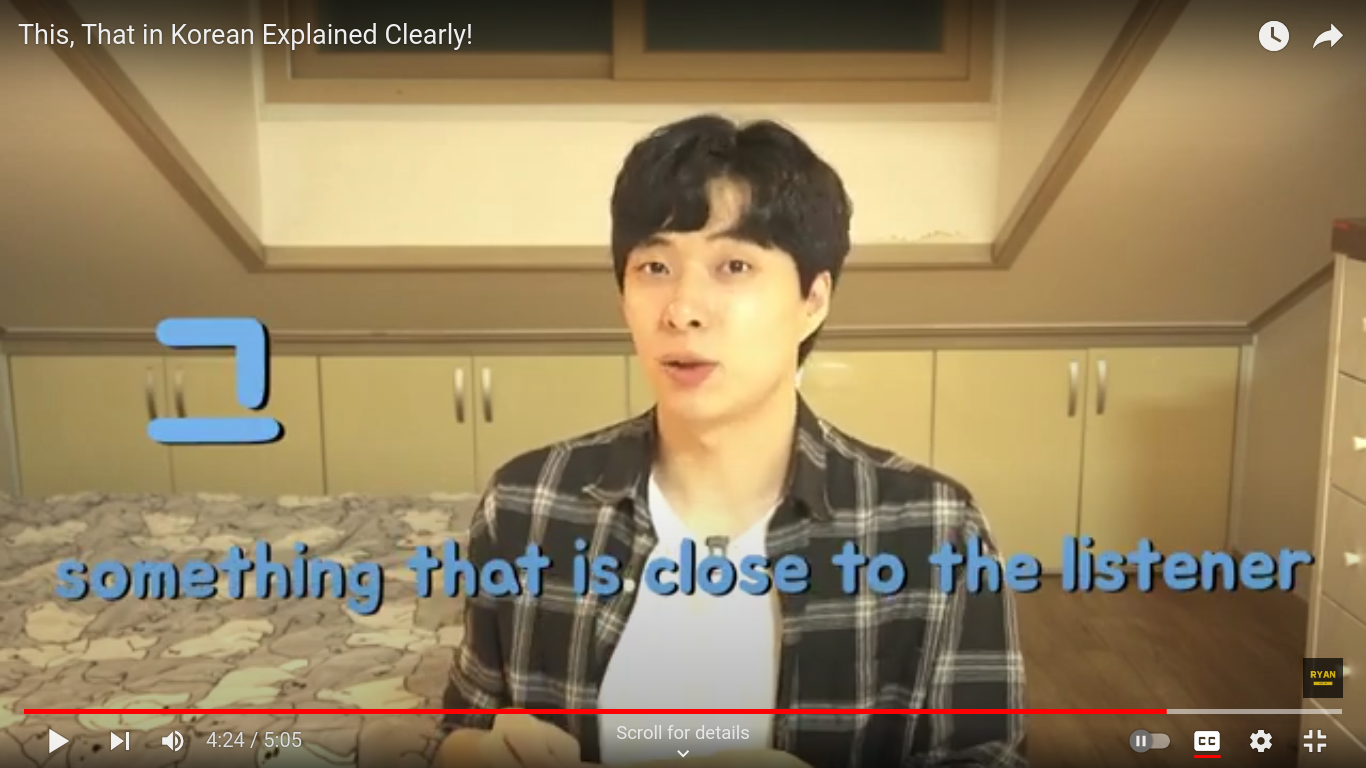
Picture with Korean words and English explanation from first video link
https://www.youtube.com/watch?v=pKvhEZIWttU
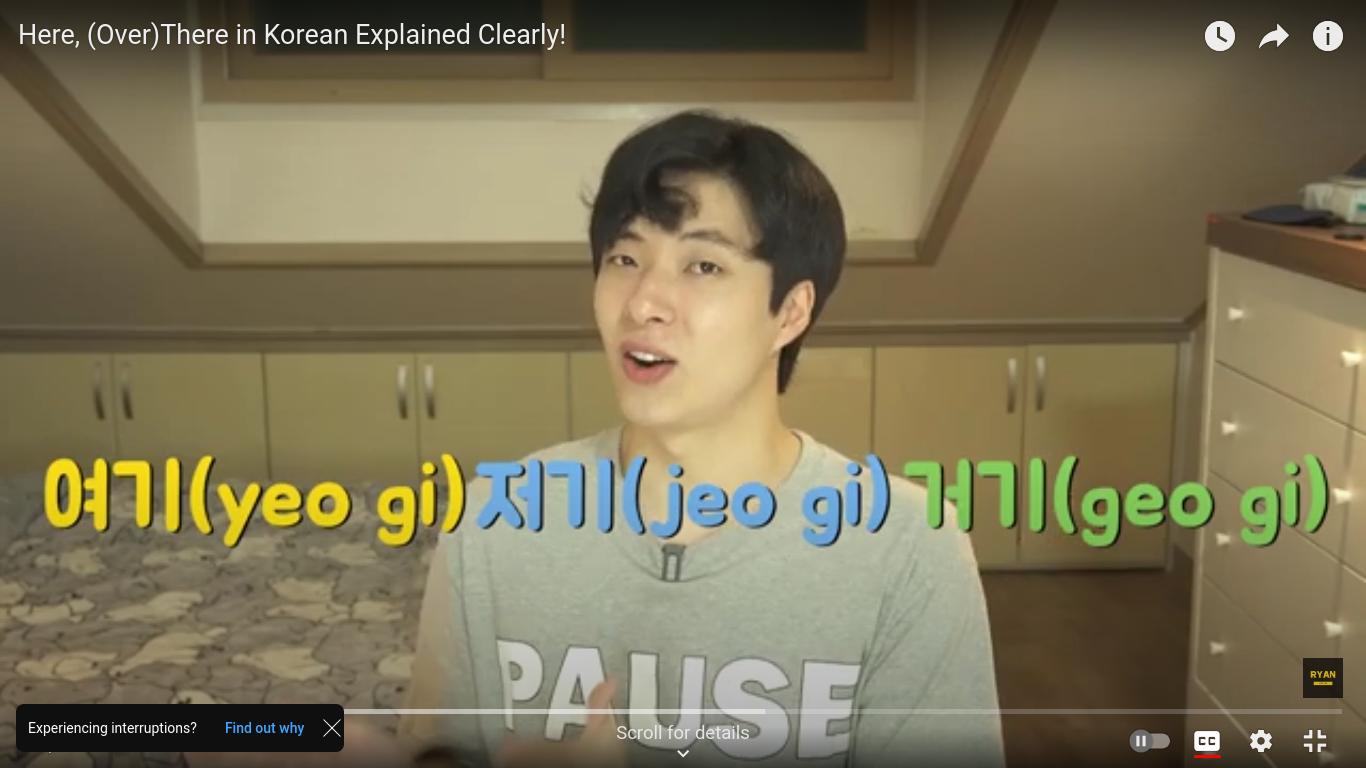
Picture of other related Korean words similar to what I called
Y, G and J in second video link
There are a whole class of words with variant spellings on these used on Duolingo with slightly different spellings and meanings that I believe Duolingo gets wrong
He confirms my point that the words are based on the location of the object in three categories
1 Near the speaker
2 Near the listener
3 Far away from the speaker and the listener
Duolingo does not seem to understand this
https://www.youtube.com/watch?v=pKvhEZIWttU
This, That in Korean Explained Clearly!
Korean Ryan
shortstories
boosted

shortstories
boosted


@Stahesh
I would still say overall the Korean is very good
The entire first unit is in very honorific style for talking to someone older than you
You can also take a class for Korean people learning English
If you take this class then you will still learn Korean as they have you translate English sentences into Korean and Korean sentences into English
But It is in a tone like the tone a Parent uses to speak to a child
They do not use a neutral tone between two people of the same age so far
You can mark a word as plural in Korean
But there is no way to mark a word as singular in Korean without using the number 1
Any word without a plural marking and without a number could be either singular or plural when translated from Korean into English
Regarding Gender
The pronoun that translates from Korean into English as He can also translate into English as She
Same with ambiguity as to him or her when translating
The gender is unknown and not specified in Korean
Nationalism not Globalism
Local Anarchist communities not Worldwide Anarchism
Corporations, United Nations Governments, Most Media and Most Clergy are on Team Evil
The Jewish religion intends to exterminate Christians
The Jewish religion intends to enslave or exterminate Gentiles or Goyim
Palestinians are the true Hebrew Israelites
at short stories at
poa dot st
@shortstories
merovingian dot club
@shortstories
worldchristianfaith.blogspot.com
Joined Sep 2023