
shortstories @[email protected]
Nationalism not Globalism
Local Anarchist communities not Worldwide Anarchism
Corporations, United Nations Governments, Most Media and Most Clergy are on Team Evil
The Jewish religion intends to exterminate Christians
The Jewish religion intends to enslave or exterminate Gentiles or Goyim
Palestinians are the true Hebrew Israelites
at short stories at
poa dot st
@shortstories
merovingian dot club
@shortstories
worldchristianfaith.blogspot.com
Joined Sep 2023
shortstories
boosted

Europe is increasing surveillance, Canada, and what do I spy (pun intended!)... Japan.
https://www.youtube.com/watch?v=n8ScKq952wM
They do have a slightly unique twist... it is not "the chiiiiiildren" but foreign information warfare.
Japan's new intelligence bureau to tackle information warfare.
shortstories
boosted

So everyone deserves to belong except for white people who want their own way?

shortstories
boosted
The national debt is fraudulent so it should not be paid back
Northerners do not need air conditioing except those with health problems because it is colder up North
The national debt is fraudulent so it should not be paid back
shortstories
boosted

Americans say the USA had jets in 1776.
shortstories
boosted
Americans say the lives of animals are more important than the lives of humans.
Notifications 40+
I still blame King of White America
shortstories
boosted

😂Tweet from the Iranian Embassy in Sierra Leone: Trump's readiness to attack Iran😂
What gets smaller the more it is filled in?
A hole
If you have none of it then you think you have all of it and the more you have of it the more you realise you are lacking in it
Knowledge
Difference between novice male and elite female swim time is greater than between elite male and elite female swim time for 1 mile for 20 to 30 years old
shortstories
boosted
The False Promise of $40 Billion in Insurance for Ships in the Strait of #Hormuz Trump’s $40 billion plan to insure ships in the Strait of Hormuz hasn’t covered a single vessel. Cradle magazine reported: Two months after the U.S. president announced a $40 billion plan to provide insurance for ships transiting the Strait of Hormuz, not a single dollar of insurance coverage has been paid out.
shortstories
boosted

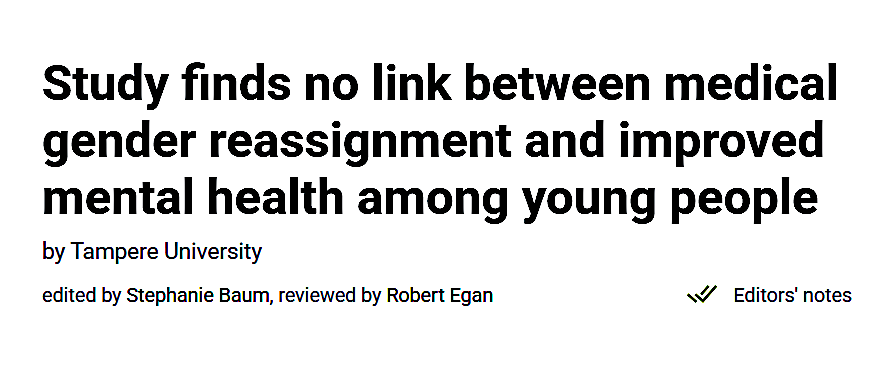
Study finds no link between medical gender reassignment and improved mental health among young people
https://medicalxpress.com/news/2026-04-link-medical-gender-reassignment-mental.html
Indicators of Major Psychiatric Problems Didn't Improve After Youth Gender-Transition Treatment In Finland—They Rose
https://benryan.substack.com/p/youth-on-gender-transition-treatment
A New Finnish Study on Mental Health Outcomes Among Adolescents Referred for Gender Identity Assessment
https://www.lgballiance.org.au/news/new-finnish-study
This study shatters the trans myth about mental health
https://spectator.com/article/this-study-shatters-the-trans-myth-about-mental-health/
https://medicalxpress.com/news/2026-04-link-medical-gender-reassignment-mental.html
Indicators of Major Psychiatric Problems Didn't Improve After Youth Gender-Transition Treatment In Finland—They Rose
https://benryan.substack.com/p/youth-on-gender-transition-treatment
A New Finnish Study on Mental Health Outcomes Among Adolescents Referred for Gender Identity Assessment
https://www.lgballiance.org.au/news/new-finnish-study
This study shatters the trans myth about mental health
https://spectator.com/article/this-study-shatters-the-trans-myth-about-mental-health/
shortstories
boosted
Key Findings of the Finnish Register Study
A major nationwide register-based study from Finland, published in April 2026 in Acta Paediatrica, has challenged prevailing assumptions about the mental health outcomes of adolescents and young adults referred for gender identity services. The research, led by Sami-Matti Ruuska from Tampere University, analyzed data from 2,083 individuals under age 23 who contacted specialized gender identity services between 1996 and 2019, comparing them to 16,643 matched controls from the general population.
The study found that psychiatric morbidity was the primary driver of poor mental health outcomes, rather than gender dysphoria itself. Among those referred to gender clinics, 45.7% had already required specialist psychiatric care before their first appointment, compared to just 15.0% of controls. This gap widened over time, with 61.7% of the gender-referred group needing psychiatric treatment during follow-up, versus 14.6% of controls.
Medical Interventions and Psychiatric Outcomes
Contrary to claims that medical gender reassignment (GR) improves mental health, the study found no evidence that hormonal or surgical interventions reduced psychiatric morbidity. In fact, among those who underwent medical GR, psychiatric treatment needs increased markedly:
For natal males seeking feminizing treatment, the proportion requiring specialist psychiatric care rose from 9.8% before referral to 60.7% after.
For natal females seeking masculinizing treatment, the rate increased from 21.6% to 54.5%.
Even after adjusting for prior psychiatric history, individuals who attended gender clinics remained three to five times more likely to need specialist psychiatric care than their peers, regardless of whether they received medical interventions. The authors concluded that "psychiatric needs do not subside after medical gender reassignment" and that in some cases, interventions "appear to be linked to deterioration in mental health."
Suicide Risk and Mortality Findings
The study also examined suicide mortality and found no statistically significant reduction in suicide risk among those who received medical gender reassignment. While suicide rates were higher in the gender-referred group compared to controls (0.3% vs. 0.1%), this difference was largely explained by pre-existing psychiatric conditions rather than gender dysphoria itself.
The researchers stated that their findings "do not support the claims that gender reassignment is necessary in order to prevent suicide" and noted that gender reassignment "has also not been shown to reduce even suicidal ideation." A related 2024 study by the same team found that when psychiatric treatment history was controlled for, gender dysphoria was not predictive of suicide mortality.
Implications for Clinical Practice and Policy
The findings have significant implications for how gender dysphoria in adolescents is assessed and treated. The authors emphasize that thorough psychiatric assessment and treatment of co-occurring mental health conditions should be prioritized before considering irreversible medical interventions. They note that "for some of these adolescents, gender dysphoria may be secondary to other mental health challenges."
Finland has already adjusted its national guidelines to reflect this approach, prioritizing comprehensive mental health care over routine hormonal or surgical interventions for minors. The study aligns with similar reviews conducted in Sweden and the United Kingdom's Cass Review, which have also called for more cautious, evidence-based approaches to gender-affirming care for young people.
Criticisms and Methodological Considerations
Some critics, including LGBTQ+ advocates, have raised concerns about the study's methodology. They argue that the increase in psychiatric contacts may reflect heightened monitoring inherent in Finland's integrated care model, where gender clinics are housed within adolescent psychiatry departments. Routine monitoring appointments could generate downstream referrals that register as psychiatric treatment in the database, potentially inflating the observed morbidity rates.
The study authors acknowledge limitations, including the relatively young age of participants and the need for longer follow-up periods to assess lifetime outcomes. They also note that the register data captures service utilization rather than symptom severity, and call for continued research with more nuanced mental health measures.
Sami‐Matti Ruuska et al, Psychiatric Morbidity Among Adolescents and Young Adults Who Contacted Specialised Gender Identity Services in Finland in 1996–2019: A Register Study, Acta Paediatrica (2026). DOI:
https://onlinelibrary.wiley.com/doi/10.1111/apa.70533
#MedicalQuackery #MedicalMalpractice #Pseudoscience #fraud #hoax #Skeptic #BigGender #GenderIndustrialComplex #LetWomenSpeak #TeamTERF #GenderCritical #SexNotGender #RadicalFeminism #RadFem #PeakTrans #TransCult
A major nationwide register-based study from Finland, published in April 2026 in Acta Paediatrica, has challenged prevailing assumptions about the mental health outcomes of adolescents and young adults referred for gender identity services. The research, led by Sami-Matti Ruuska from Tampere University, analyzed data from 2,083 individuals under age 23 who contacted specialized gender identity services between 1996 and 2019, comparing them to 16,643 matched controls from the general population.
The study found that psychiatric morbidity was the primary driver of poor mental health outcomes, rather than gender dysphoria itself. Among those referred to gender clinics, 45.7% had already required specialist psychiatric care before their first appointment, compared to just 15.0% of controls. This gap widened over time, with 61.7% of the gender-referred group needing psychiatric treatment during follow-up, versus 14.6% of controls.
Medical Interventions and Psychiatric Outcomes
Contrary to claims that medical gender reassignment (GR) improves mental health, the study found no evidence that hormonal or surgical interventions reduced psychiatric morbidity. In fact, among those who underwent medical GR, psychiatric treatment needs increased markedly:
For natal males seeking feminizing treatment, the proportion requiring specialist psychiatric care rose from 9.8% before referral to 60.7% after.
For natal females seeking masculinizing treatment, the rate increased from 21.6% to 54.5%.
Even after adjusting for prior psychiatric history, individuals who attended gender clinics remained three to five times more likely to need specialist psychiatric care than their peers, regardless of whether they received medical interventions. The authors concluded that "psychiatric needs do not subside after medical gender reassignment" and that in some cases, interventions "appear to be linked to deterioration in mental health."
Suicide Risk and Mortality Findings
The study also examined suicide mortality and found no statistically significant reduction in suicide risk among those who received medical gender reassignment. While suicide rates were higher in the gender-referred group compared to controls (0.3% vs. 0.1%), this difference was largely explained by pre-existing psychiatric conditions rather than gender dysphoria itself.
The researchers stated that their findings "do not support the claims that gender reassignment is necessary in order to prevent suicide" and noted that gender reassignment "has also not been shown to reduce even suicidal ideation." A related 2024 study by the same team found that when psychiatric treatment history was controlled for, gender dysphoria was not predictive of suicide mortality.
Implications for Clinical Practice and Policy
The findings have significant implications for how gender dysphoria in adolescents is assessed and treated. The authors emphasize that thorough psychiatric assessment and treatment of co-occurring mental health conditions should be prioritized before considering irreversible medical interventions. They note that "for some of these adolescents, gender dysphoria may be secondary to other mental health challenges."
Finland has already adjusted its national guidelines to reflect this approach, prioritizing comprehensive mental health care over routine hormonal or surgical interventions for minors. The study aligns with similar reviews conducted in Sweden and the United Kingdom's Cass Review, which have also called for more cautious, evidence-based approaches to gender-affirming care for young people.
Criticisms and Methodological Considerations
Some critics, including LGBTQ+ advocates, have raised concerns about the study's methodology. They argue that the increase in psychiatric contacts may reflect heightened monitoring inherent in Finland's integrated care model, where gender clinics are housed within adolescent psychiatry departments. Routine monitoring appointments could generate downstream referrals that register as psychiatric treatment in the database, potentially inflating the observed morbidity rates.
The study authors acknowledge limitations, including the relatively young age of participants and the need for longer follow-up periods to assess lifetime outcomes. They also note that the register data captures service utilization rather than symptom severity, and call for continued research with more nuanced mental health measures.
Sami‐Matti Ruuska et al, Psychiatric Morbidity Among Adolescents and Young Adults Who Contacted Specialised Gender Identity Services in Finland in 1996–2019: A Register Study, Acta Paediatrica (2026). DOI:
https://onlinelibrary.wiley.com/doi/10.1111/apa.70533
#MedicalQuackery #MedicalMalpractice #Pseudoscience #fraud #hoax #Skeptic #BigGender #GenderIndustrialComplex #LetWomenSpeak #TeamTERF #GenderCritical #SexNotGender #RadicalFeminism #RadFem #PeakTrans #TransCult
I like a lot of Electronic Arts games that were SSI dungeon and dragons games from AD&D 2nd edition or earlier but electronic arts also has a bad reputation and is accused of ruining games after purchasing game studips
Did something hapoen that changed how Electronic Arts operates resulting in lower game quality than it had earlier?
shortstories
boosted

I have to assume that this is in spite of Trump.
shortstories
boosted

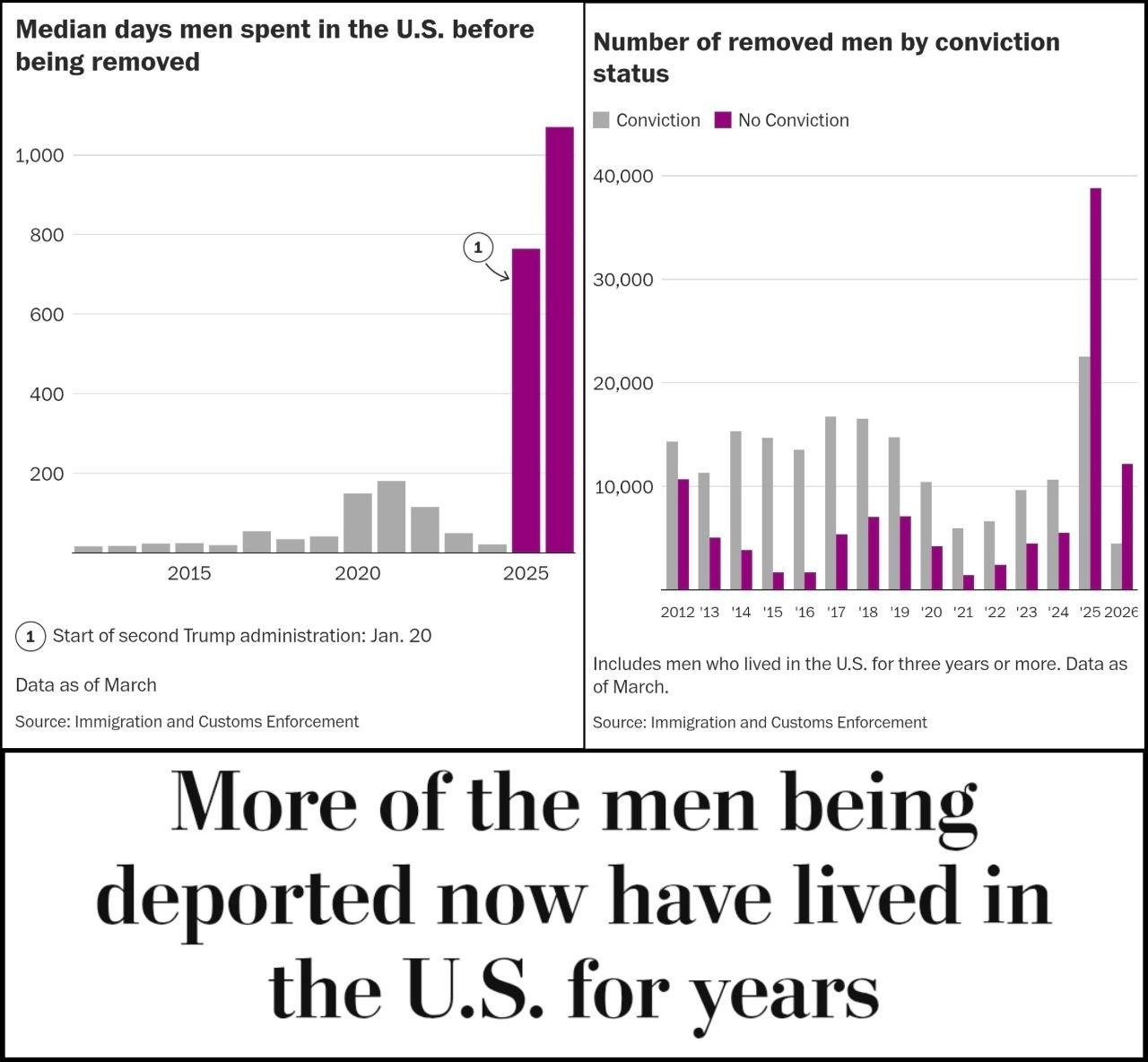
Recent WaPo report shows that more illegals who've lived in the U.S. for years are being deported than ever, and aliens with no current criminals convictions are the largest group being removed now.
This indicates that Trump is deporting a record number of illegal aliens from the interior, unlike previous admins which overwhelmingly removed recent border arrivals and immediate border crossers.
shortstories
boosted


Nationalism not Globalism
Local Anarchist communities not Worldwide Anarchism
Corporations, United Nations Governments, Most Media and Most Clergy are on Team Evil
The Jewish religion intends to exterminate Christians
The Jewish religion intends to enslave or exterminate Gentiles or Goyim
Palestinians are the true Hebrew Israelites
at short stories at
poa dot st
@shortstories
merovingian dot club
@shortstories
worldchristianfaith.blogspot.com
Joined Sep 2023