shortstories @[email protected]
Nationalism not Globalism
Local Anarchist communities not Worldwide Anarchism
Corporations, United Nations Governments, Most Media and Most Clergy are on Team Evil
The Jewish religion intends to exterminate Christians
The Jewish religion intends to enslave or exterminate Gentiles or Goyim
Palestinians are the true Hebrew Israelites
at short stories at
poa dot st
@shortstories
merovingian dot club
@shortstories
worldchristianfaith.blogspot.com
Joined Sep 2023
"Marx had been a prolific contributor to the New York Daily Tribune, the most influential Republican newspaper of the 1850s"
https://jacobin.com/2012/08/lincoln-and-marx
Jacobin dot com
RETROPOLIS
You know who was into Karl Marx? No, not AOC. Abraham Lincoln.
The two men were friendly and influenced each other
By Gillian Brockell
July 27, 2019 at 7:00 a.m. EDT
Washington Post
"Karl Marx and Abraham Lincoln exchanged letters at the end of the Civil War"
https://libcom.org/article/unfinished-revolution-karl-marx-and-abraham-lincoln-robin-blackburn
libcom dot org
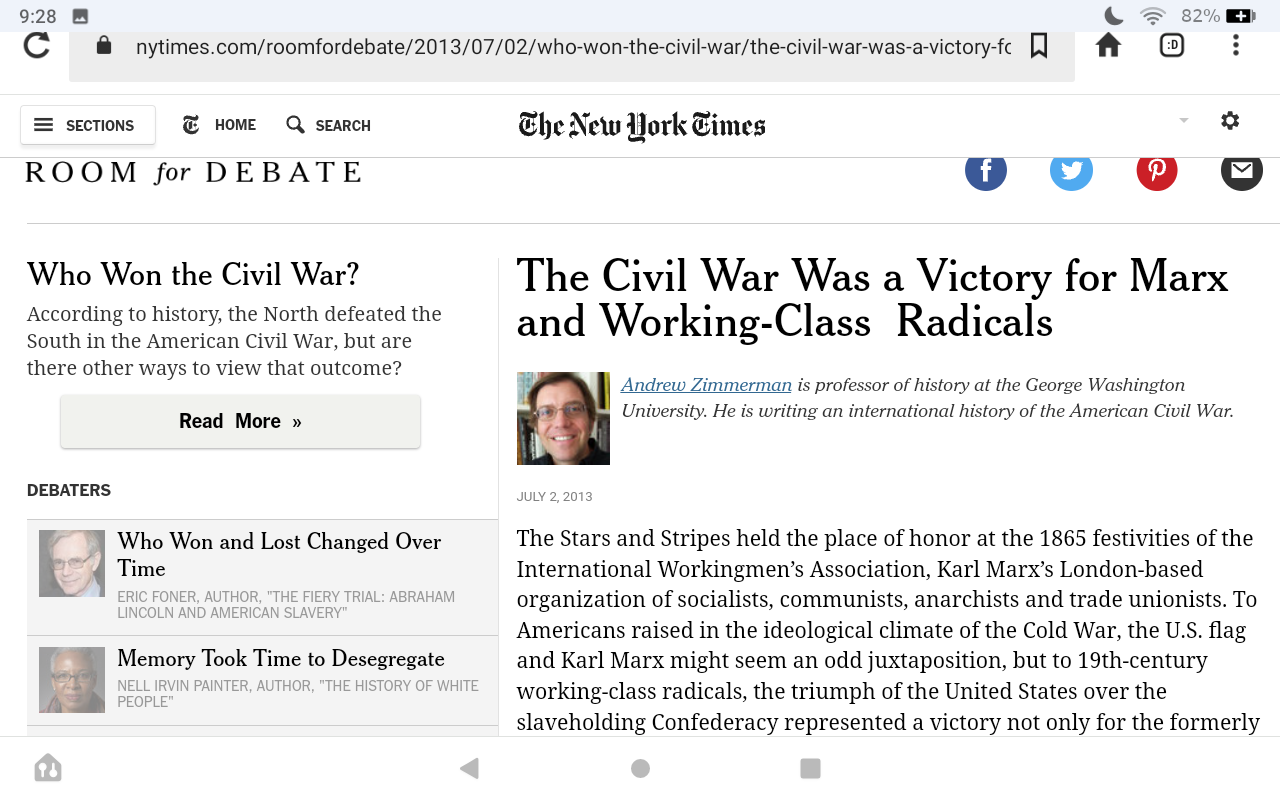
The civil war was a victory for Marx
New York Times
Marx and Engels were both soon troubled by the actions of Andrew Johnson, the new president. On 15 July 1865, Engels wrote to his friend attacking Johnson: “His hatred of Negroes comes out more and more violently . . . If things go on like this, in six months all the old villains of secession will be sitting in Congress at Washington. Without colored suffrage, nothing whatever can be done there.” Radical Republicans soon came to the same conclusion.
https://jacobin.com/2012/08/lincoln-and-marx
Jacobin dot com
Marx gave full support to the Union cause, even though Lincoln initially refused to make emancipation a war goal. Marx was confident that the clash of rival social regimes, based on opposing systems of labor, would sooner or later surface as the real issue.
https://jacobin.com/2012/08/lincoln-and-marx
Jacobin dot com
Marx insisted that secession had been prompted by the Southern elite’s political fears. They knew that power within the Union was shifting against them. The South was losing its tight grip on federal institutions because of the dynamism of the Northwest, a destination for many new immigrants.
https://jacobin.com/2012/08/lincoln-and-marx
Jacobin dot com
Lincoln may have recognized the name Karl Marx when he read the IWA “Address,” since Marx had been a prolific contributor to the New York Daily Tribune, the most influential Republican newspaper of the 1850s.
https://jacobin.com/2012/08/lincoln-and-marx
Jacobin dot com
"International Working Men’s Association (IWMA)."
"
The U.S. ambassador and prominent scion of the presidential family informed the IWMA secretary William Cremer that the Address had been transmitted and received by Lincoln. The president willingly accepted the “sentiments” from “his fellow citizens” (Lincoln never forgot his political obligations even in a private letter!) as well as “friends of humanity and progress” globally.
"
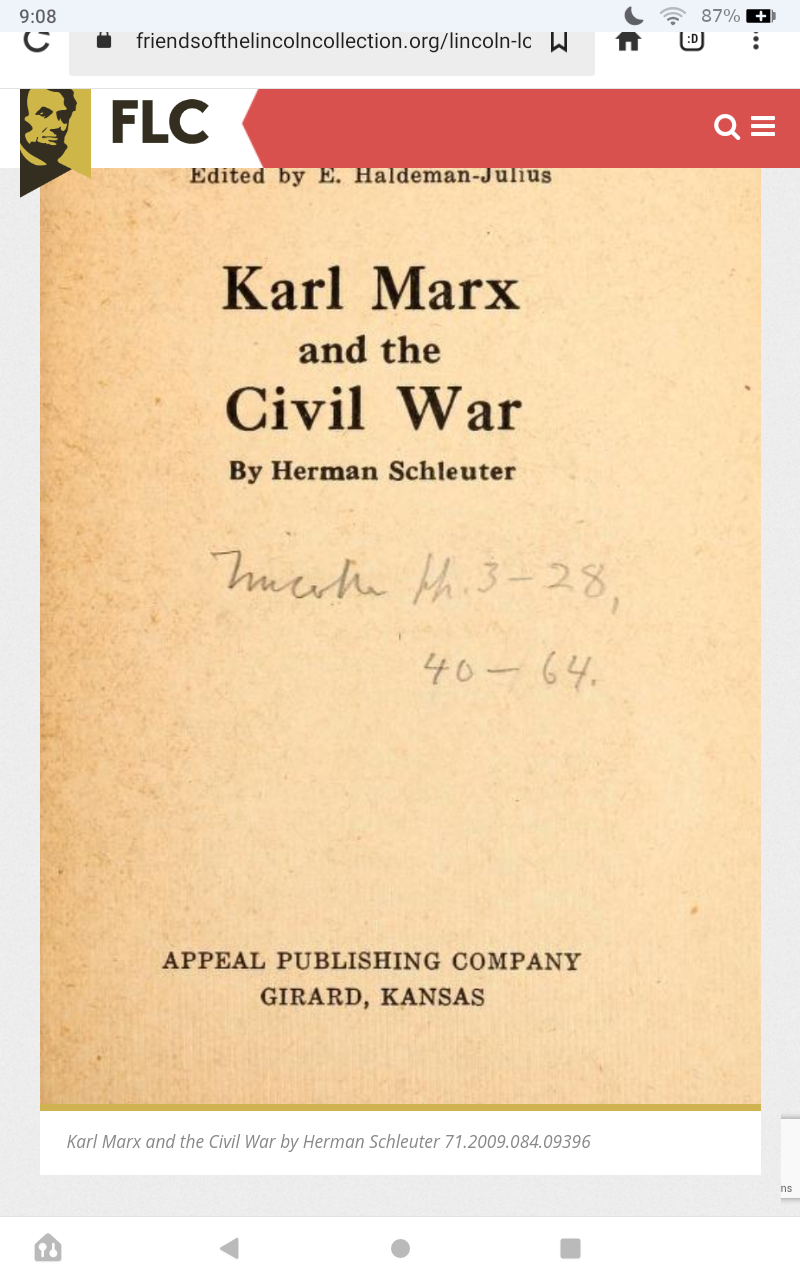
https://www.friendsofthelincolncollection.org/lincoln-lore/marx-and-lincoln/
friendsofthelincolncollection org
shortstories
boosted

Marx received a letter from his friend Engels about the new president, Andrew Johnson: “His hatred of Negroes comes out more and more violently… If things go on like this, in six months all the old villains of secession will be sitting in Congress at Washington. Without colored suffrage, nothing whatever can be done there.”
openculture.com
"
Lincoln was not, of course, a Communist. And yet some of the ideas he absorbed from Marx’s Tribune writings — many of which would later be adapted for the first volume of Capital – made their way into the Republican Party of the 1850s and 60s. That party, writes Brockell, was “anti-slavery, pro-worker and sometimes overtly socialist,”
"
https://www.openculture.com/2022/01/how-karl-marx-influenced-abraham-lincoln-and-his-position-on-slavery-labor.html
openculture dot com
As historian Robin Blackburn writes, “The US ambassador in London conveyed a friendly but brief response from the president. However, the antecedents and implications of this little exchange are rarely considered.” It was not the first time Marx and Lincoln had encountered each other. They never met personally, but their affinities led to what Blackburn calls an “unfinished revolution” — not a communist revolution in the U.S.; but a potential revolution for democracy.
"
Lincoln and Marx became mutual admirers in the early 1860s due to the latter’s work as a foreign correspondent for The New York Daily Tribune. From 1852 until the start of the Civil War, Marx, sometimes with Engels, wrote “over five hundred articles for the Tribune,”
"
"
Early in the war, he championed the Union cause, even before Lincoln decided on emancipation as a course of action
"
The International Workingmen's Association 1864
Address of the International Working Men's Association to Abraham Lincoln, President of the United States of America
Presented to U.S. Ambassador Charles Francis Adams
January 28, 1865
https://www.marxists.org/archive/marx/iwma/documents/1864/lincoln-letter.htm
Marxists dot org
shortstories
boosted


shortstories
boosted
The Economic Ninja Reacts To A Dave Ramsey Rant https://youtube.com/watch?v=YIByXO3Aubg&si=Mdvvwq6VM-VOfxGo
shortstories
boosted

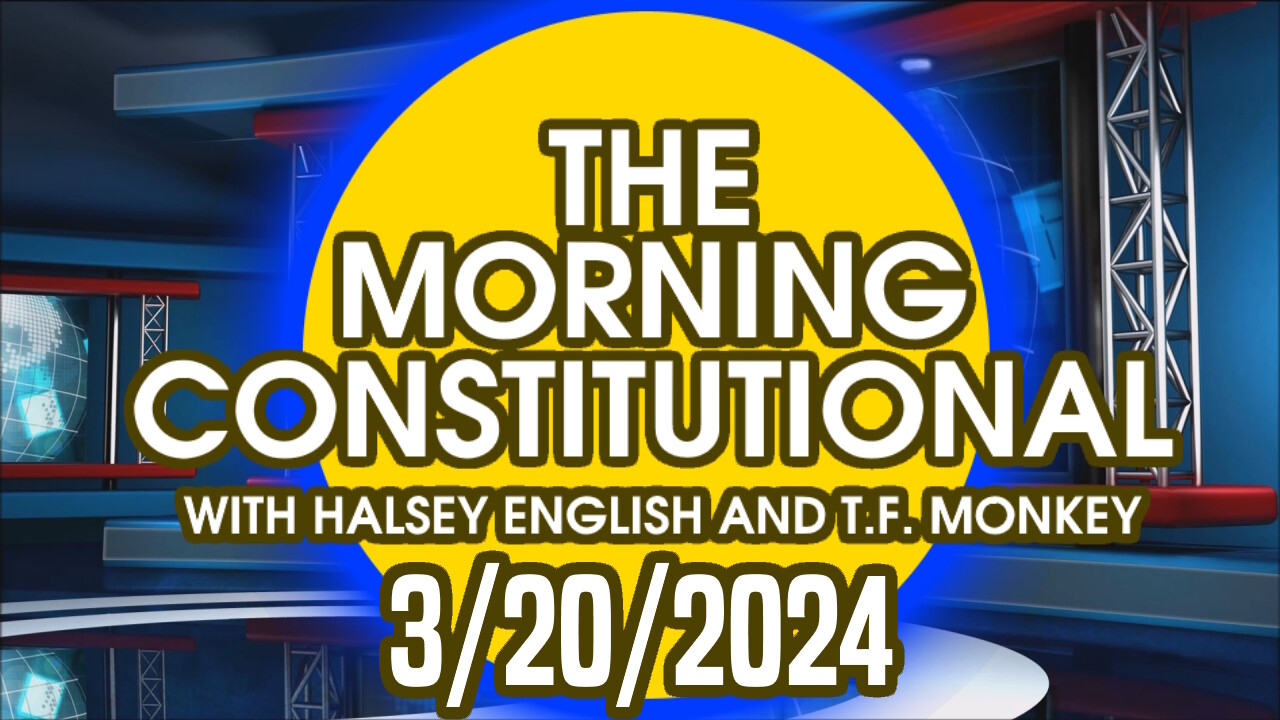
The TFM Show: March 20th, 2024
Rumble: https://rumble.com/v4lwy3u-the-tfm-show-march-20th-2024.html
MGTOW.TV: https://www.mgtow.tv/watch/the-tfm-show-march-20th-2024\_wdD1N36cFmcFJqn.html
Bitchute: https://www.bitchute.com/video/zZms8E5vvrPY/
Odysee: https://odysee.com/@TurdFlingingMonkey:1/2024-03-20-08-00-08:7
PeerTube: https://peertube.su/w/2aZmMQz3ZifoTPG7t3JcLe
shortstories
boosted

Nationalism not Globalism
Local Anarchist communities not Worldwide Anarchism
Corporations, United Nations Governments, Most Media and Most Clergy are on Team Evil
The Jewish religion intends to exterminate Christians
The Jewish religion intends to enslave or exterminate Gentiles or Goyim
Palestinians are the true Hebrew Israelites
at short stories at
poa dot st
@shortstories
merovingian dot club
@shortstories
worldchristianfaith.blogspot.com
Joined Sep 2023